Podcast Intro Music Guide: Make a Hook Listeners Remember
Create podcast intro music with AI by defining show tone, voiceover space, length, sonic logo, loop points, and episode workflow.
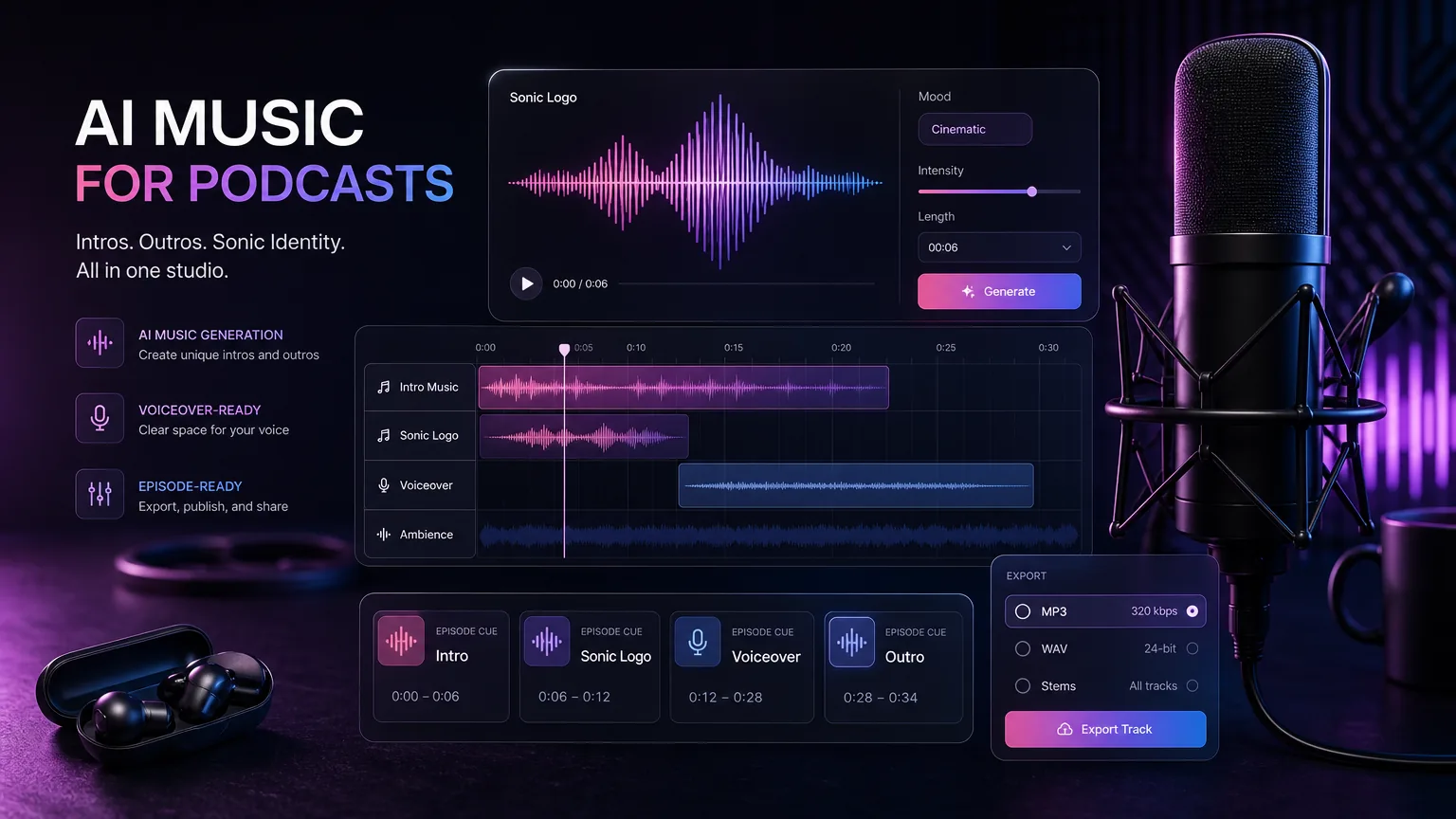
A podcast intro should identify the show quickly without blocking the host. This guide shows how to prompt short, branded music cues that work with voiceover and episode templates.
Before you start
Keep intros short unless the show format needs atmosphere.
Leave frequency space for voiceover.
Create a sonic logo that can repeat across episodes.
Export short, long, and loop-safe versions.
Practical workflow
Use the guide as a repeatable production pass
This guide is organized around the same steps a creator needs before opening the matching tool: define the input, control the model, review the result, then change one variable at a time.
Define the show promise
Make room for the host
Build an episode kit
Prompt around frequency space, not just mood
Field-tested prompt patterns
Five-second sonic logo
Fast brand cue
Create a 5-second podcast sonic logo for [show name]. Mood: [tone]. Instruments: [palette]. Include a clear start, one memorable motif, and a clean tail for voiceover.
Intro bed
Host introduction
Create a 20-second intro bed for a [topic] podcast. Keep energy [level], leave space for spoken host names, avoid busy lead melodies, and end with a soft transition.
Segment bumper
Recurring show section
Create a 7-second bumper for [segment]. Use the same sonic identity as the main intro but with lighter instrumentation and a decisive ending.
Quality bar
Do not approve the draft until it passes these checks
Voiceover space
The intro leaves midrange room so host speech remains clear.
Brand memory
A short motif can be recognized across intro, bumper, and outro.
Length discipline
The cue does not overstay before the host starts speaking.
Loudness check
The cue is not jarringly louder than the episode body.
Reusable exports
Intro, outro, and bumper variants share naming and sonic identity.
Define the show promise
Intro music should tell listeners what kind of show they entered. A finance podcast may need calm authority. A comedy show may need bounce and personality. A true crime show may need tension without overwhelming narration.
Write the show promise before the prompt. Then translate it into instrumentation, tempo, and mood.
Next step: podcast intro music generator — Generate the cue after the sonic identity and length are defined.
Make room for the host
If the host speaks over the intro, avoid busy vocals, sharp lead instruments, and crowded midrange. Ask for a clean bed, light percussion, and a recognizable two-second sonic logo at the top or end.
Create a version with no melody under voiceover if the narration needs maximum clarity.
Next step: sound effects creator guide — Create bumpers, transitions, and stingers around the intro identity.
Build an episode kit
Generate a 5-second sting, 15-second intro, 30-second intro, and loopable bed. This gives editors flexible assets without reinventing the show sound every episode.
Next step: AI music generator — Create longer beds if the episode needs background music.
Prompt around frequency space, not just mood
Podcast music must leave room for speech. A prompt that only says energetic or cinematic may create a cue that fights the host's voice. Add frequency and arrangement notes: light bass, no lead vocal, soft midrange, short logo hit, and reduced percussion under narration.
If the intro will run under a spoken cold open, request a bed version with fewer melodic events. If it plays before the host speaks, a stronger sonic logo can work better.
Avoid vocals under narration.
Use a short motif that returns in trailers and outros.
Export a no-melody bed for voiceover-heavy episodes.
Next step: commercial rights for AI music — Check use terms before using intro music in sponsored shows.
Use music cues as brand assets
A podcast intro is part of the show's memory system. The same motif can appear in trailers, sponsor transitions, chapter breaks, social clips, and outro cards. Generating these variants together keeps the brand sound consistent.
This makes the workflow more useful than a one-off generator prompt. It answers planning, prompting, editing, and asset organization questions for podcasters who need repeatable production.
Test the intro in a real episode timeline
A cue can sound impressive alone and still fail inside an episode. Place it under a real host read, sponsor transition, and outro before approving it. Listen on earbuds, laptop speakers, and a phone because many podcast listeners use small speakers where bass and speech clarity change quickly.
If the music distracts from the first sentence, reduce melodic movement or lower the density. If the show feels forgettable, strengthen the sonic logo rather than extending the whole intro.
Add metadata that helps podcast discovery
When preparing podcast music assets, write the use case into the file names and project notes. The kit should answer intro length, voiceover space, loop versions, and rights before the episode editor starts cutting.
This keeps the creative guide and the production tool in sync. The guide explains the decisions, while the tool handles the actual cue generation.
Frequently asked questions
How long should podcast intro music be?
Most shows work well with 5 to 20 seconds. Longer intros need a strong editorial reason.
Should podcast intro music include vocals?
Usually no if the host speaks over it. Vocal hooks work better for standalone trailers or branded segments.
Can AI make a sonic logo?
Yes. Prompt for a short, repeatable motif that can open or close every episode.