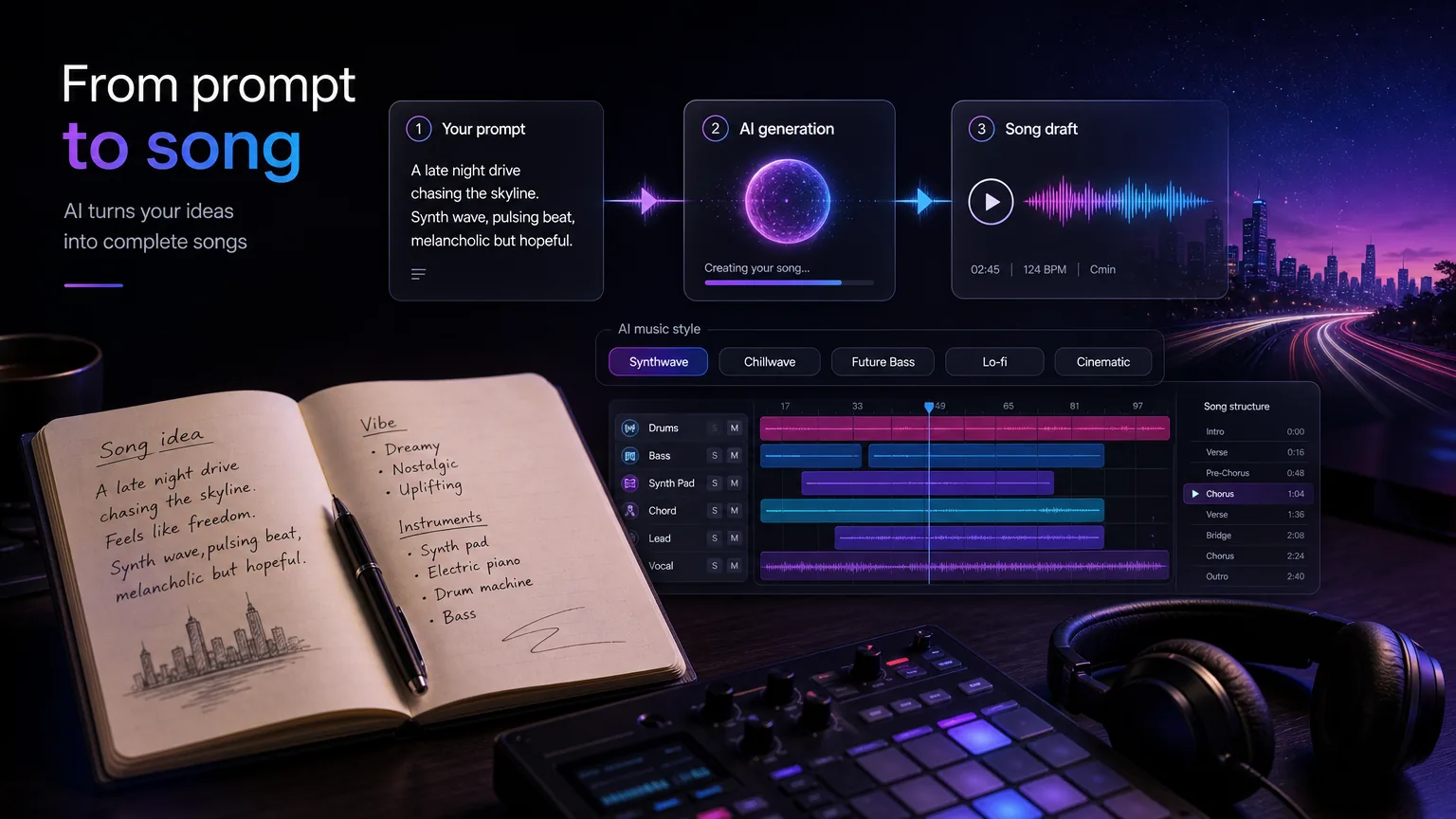
AI Songwriting11 min read
How to Write AI Song Prompts That Produce Better Music
Learn a repeatable AI song prompt workflow for lyrics, mood, structure, style tags, vocals, and commercial-ready song drafts.
Read the guide
Learn how to write prompts, shape lyrics, capture melodies, prepare stems, plan music videos, and publish creator-ready audio with fewer dead ends.
36
Creator guides
5
Music workflows
30+
Tool paths
Learn a repeatable AI song prompt workflow for lyrics, mood, structure, style tags, vocals, and commercial-ready song drafts.
Pick the guide that matches your starting point: a lyric, a text prompt, a melody memo, a separated stem, or a release asset.
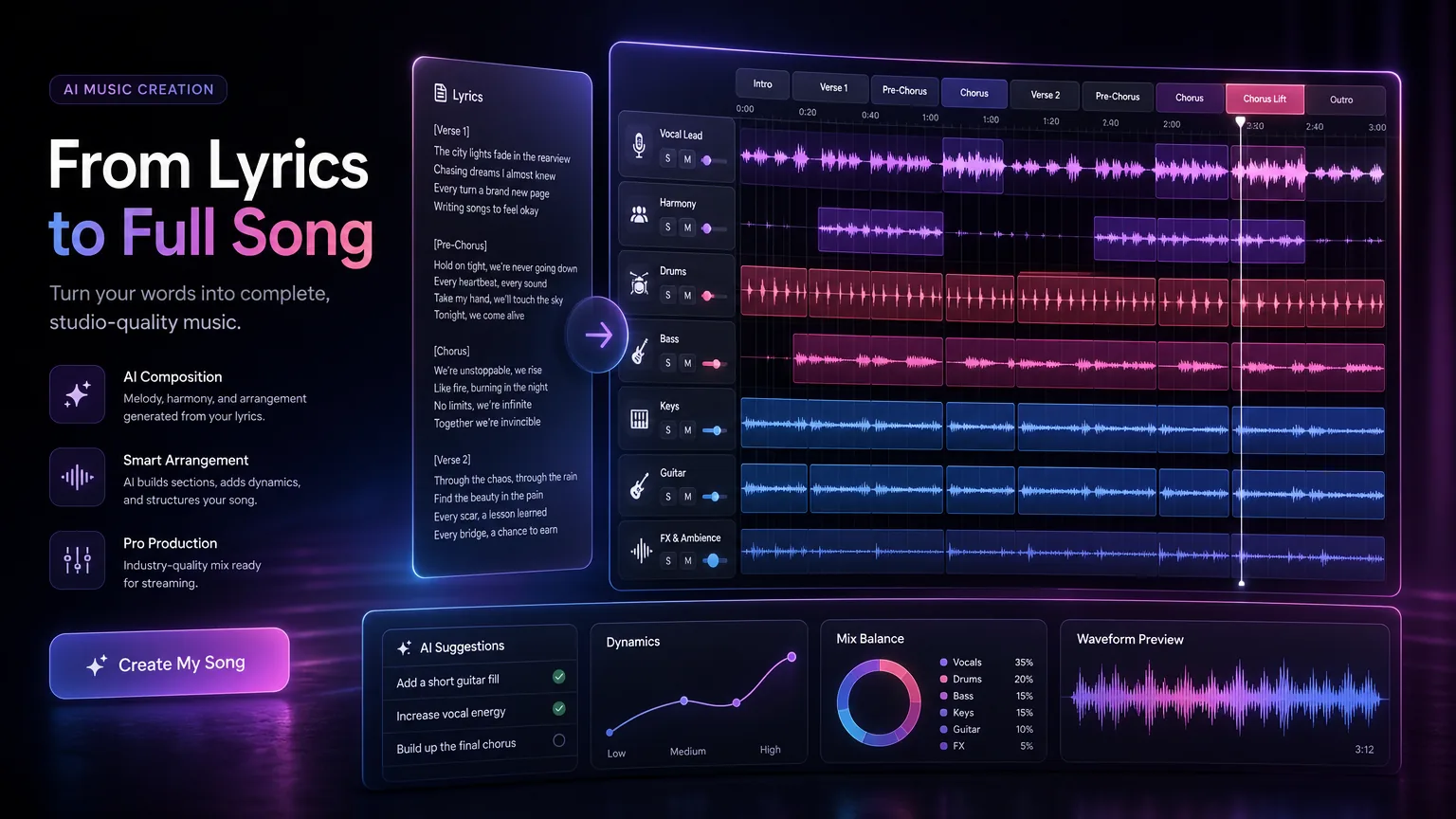
Finished lyrics are only half of a song. This workflow shows how to mark structure, guide the vocal performance, and give arrangement cues so an AI generator can turn words into music that feels intentional.
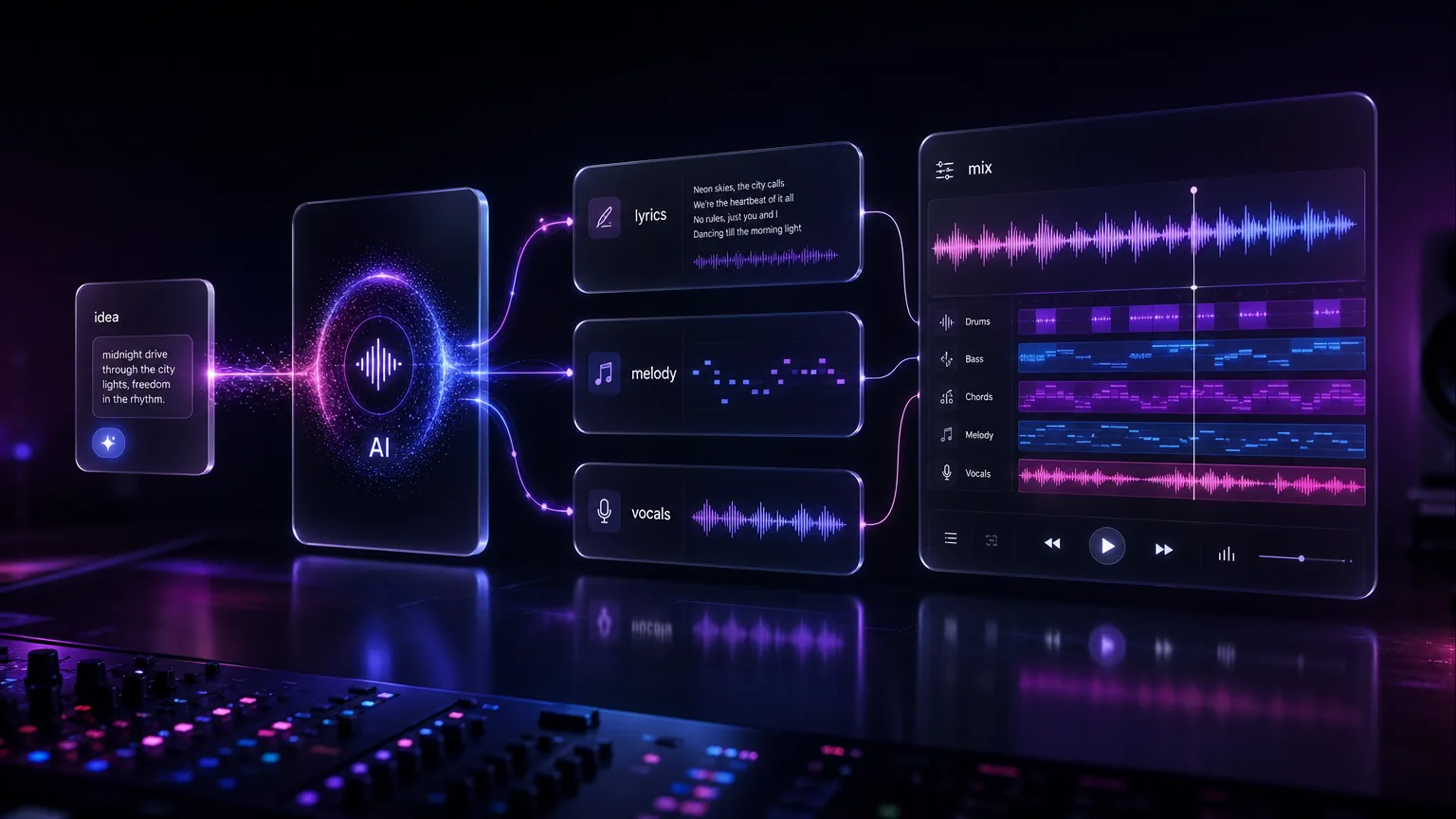
Text-to-song works best when the idea becomes a brief, the brief becomes a song structure, and the first draft becomes material for revision. This guide gives a clean workflow for creators who do not have lyrics yet.
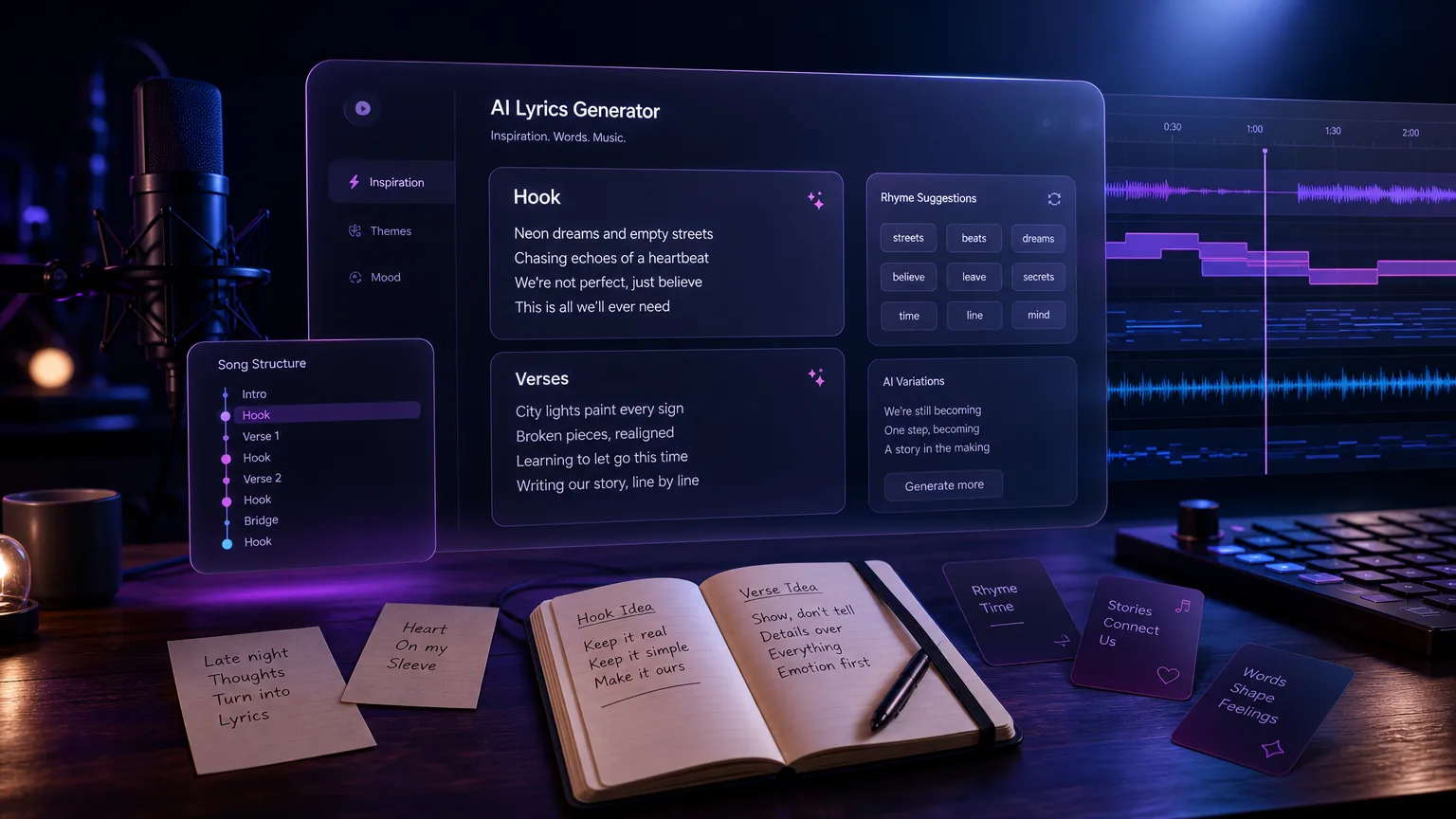
AI can break writer’s block, but the best lyrics still need a human point of view. This article shows how to use AI for options, not autopilot.
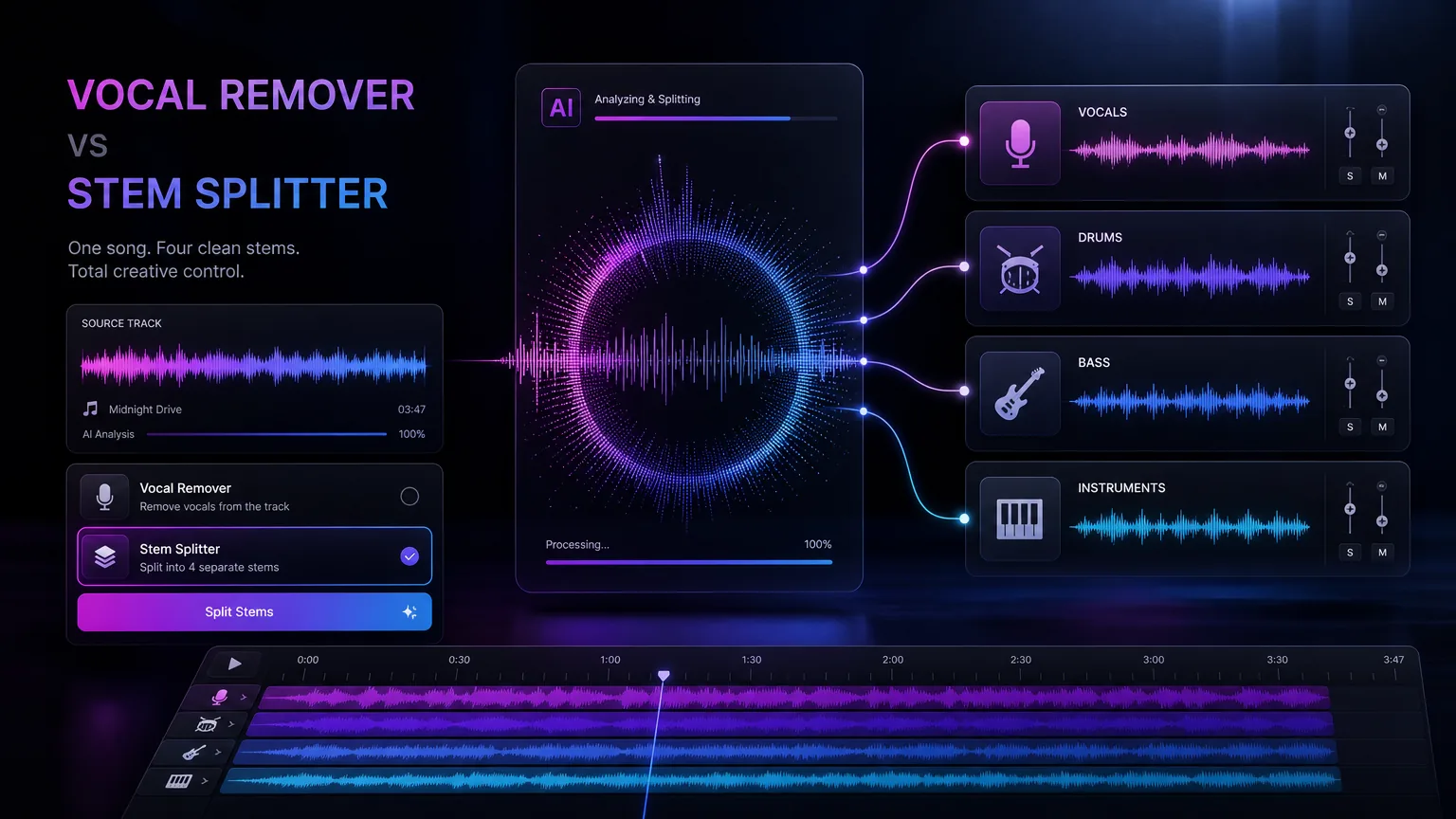
Both tools separate audio, but they solve different jobs. Vocal removers create karaoke and acapella outputs, while stem splitters give deeper control over drums, bass, vocals, and instruments.
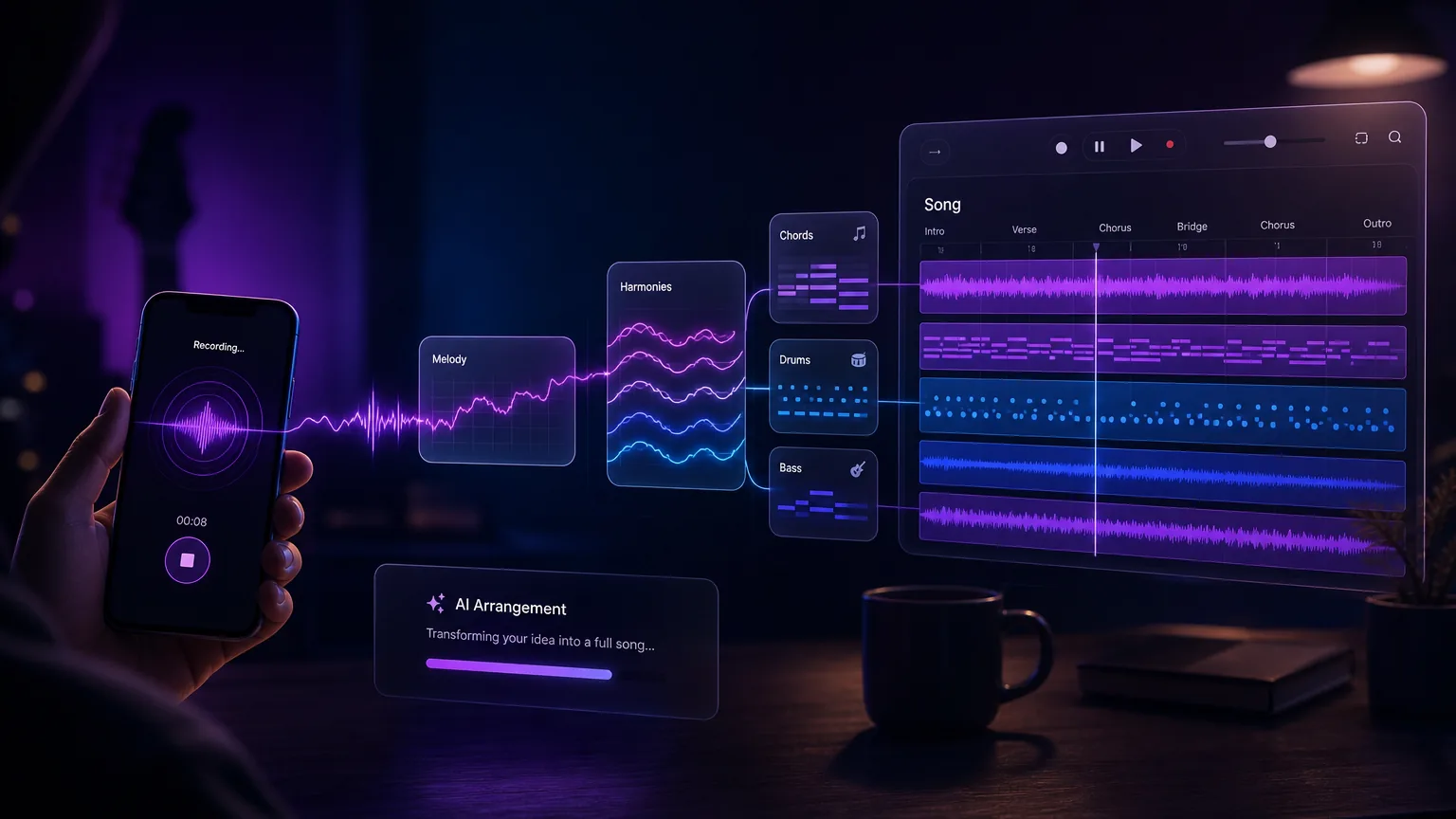
A hummed melody is often the most honest version of a song idea. This guide explains how to record it clearly and give AI enough context to build a full arrangement around it.
Use these focused guides to prepare inputs, avoid common mistakes, and move into the tool with a clearer brief.
Audio Tools
AI Song Covers
Melody to Song
Sound Design
Sound Effects Library
These guides cover covers, rights, podcast cues, MIDI conversion, and custom sound effects for creators who need complete release assets.
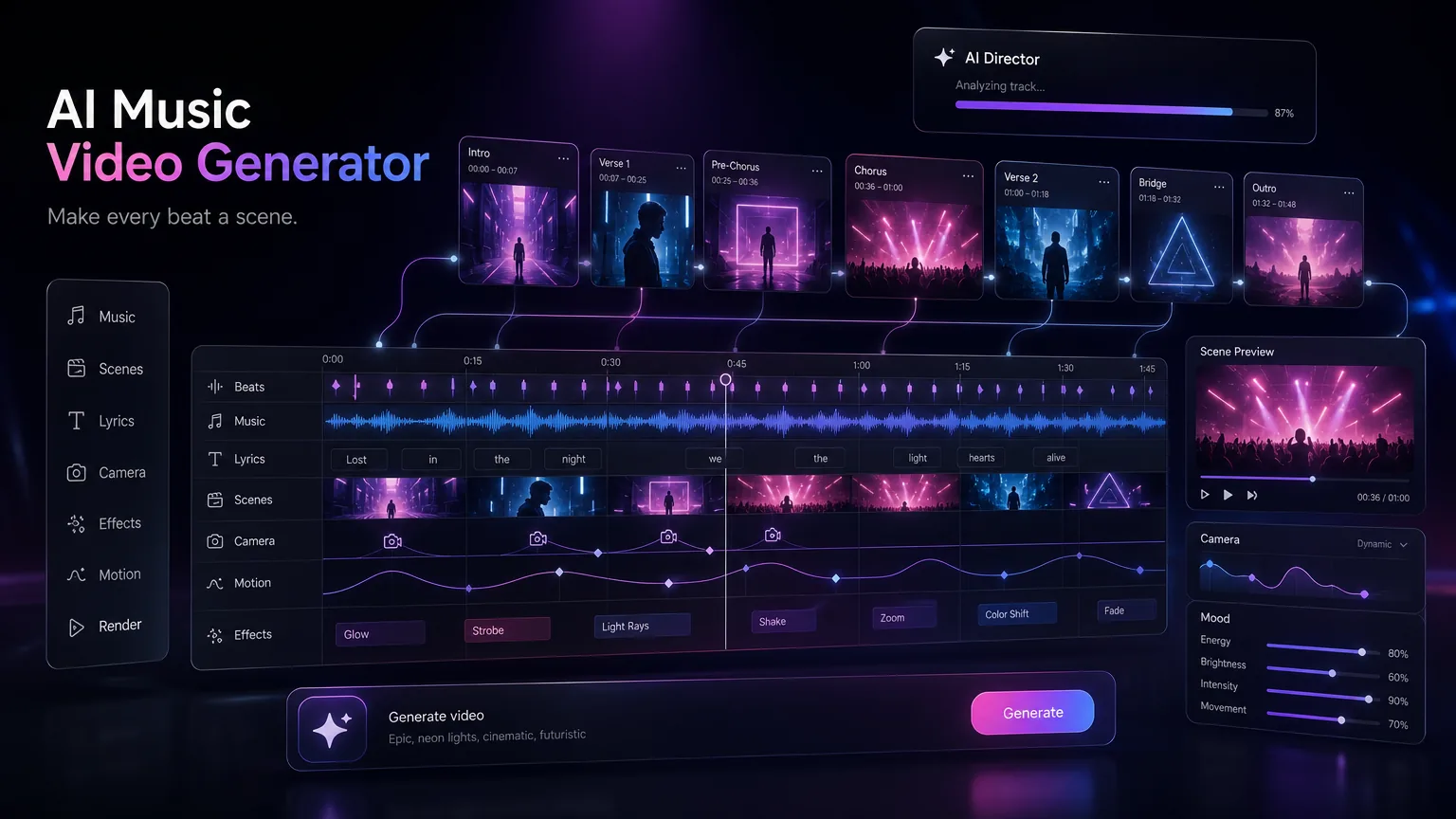
A strong AI music video is not just random visuals attached to audio. It needs scene planning, pacing, visual consistency, and platform-aware export choices.
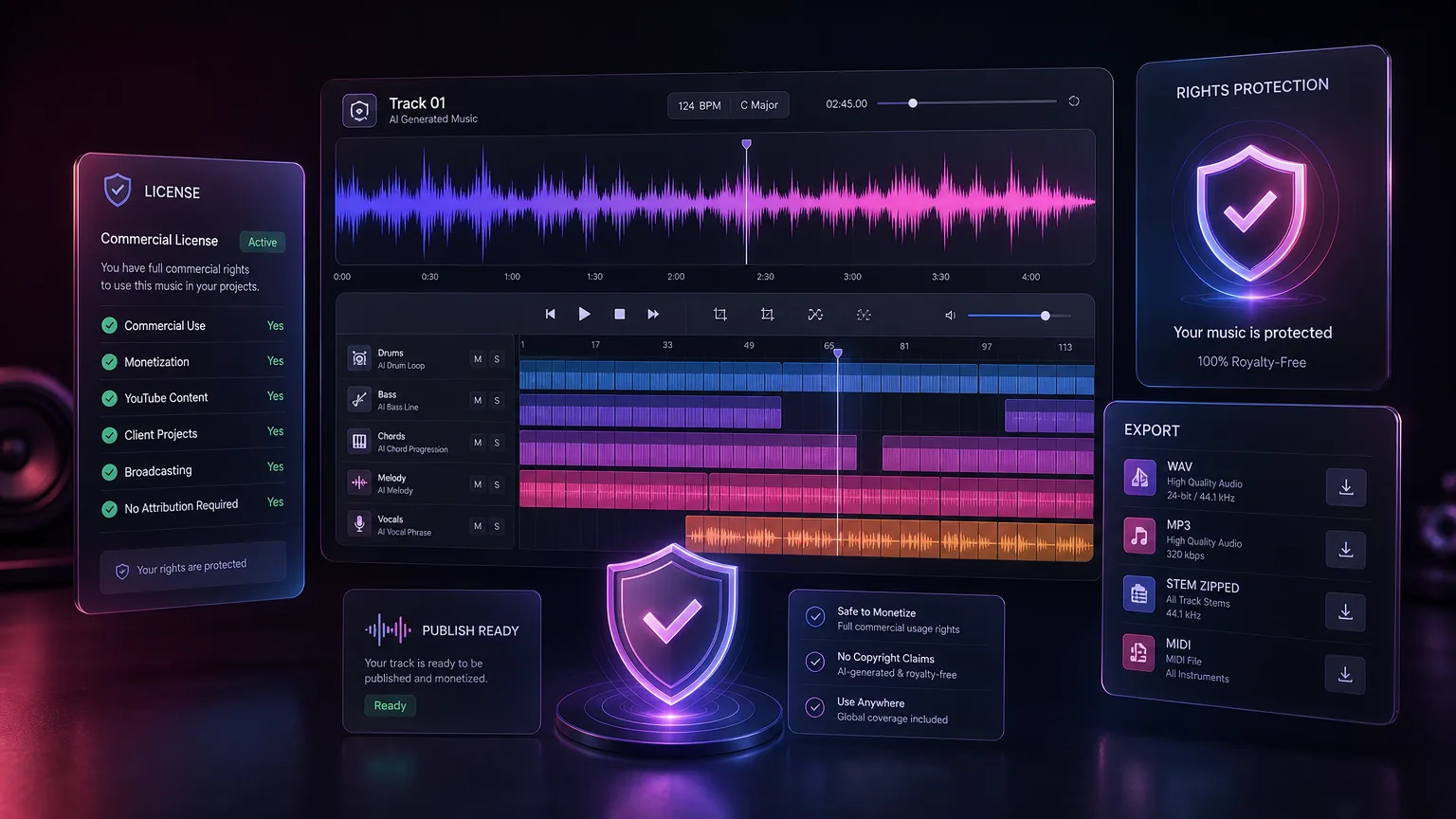
Commercial use is not just a download button. Before publishing AI music in ads, games, podcasts, or monetized videos, creators should understand plan rights, input rights, voice safety, and record keeping.
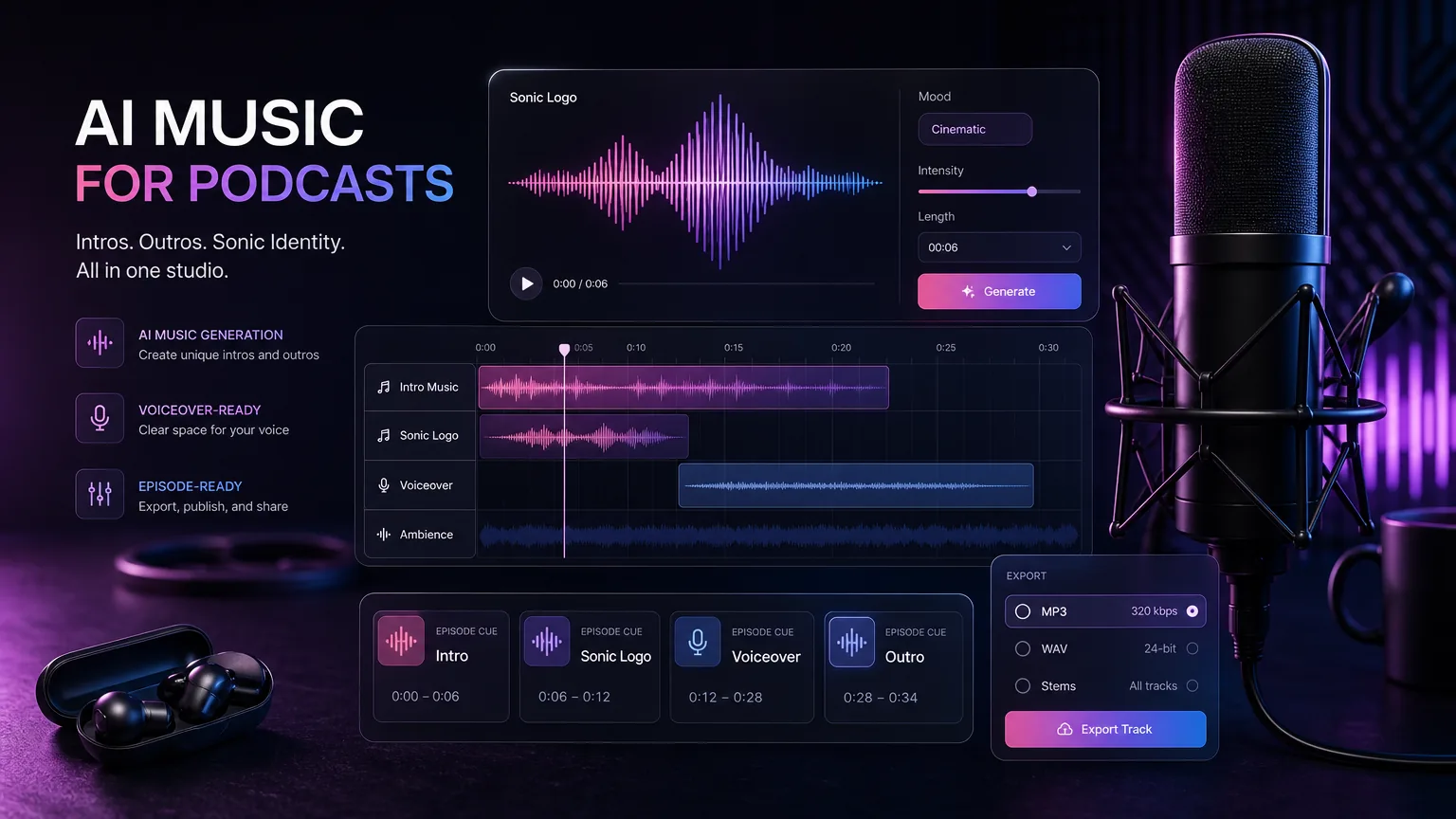
A podcast intro should identify the show quickly without blocking the host. This guide shows how to prompt short, branded music cues that work with voiceover and episode templates.
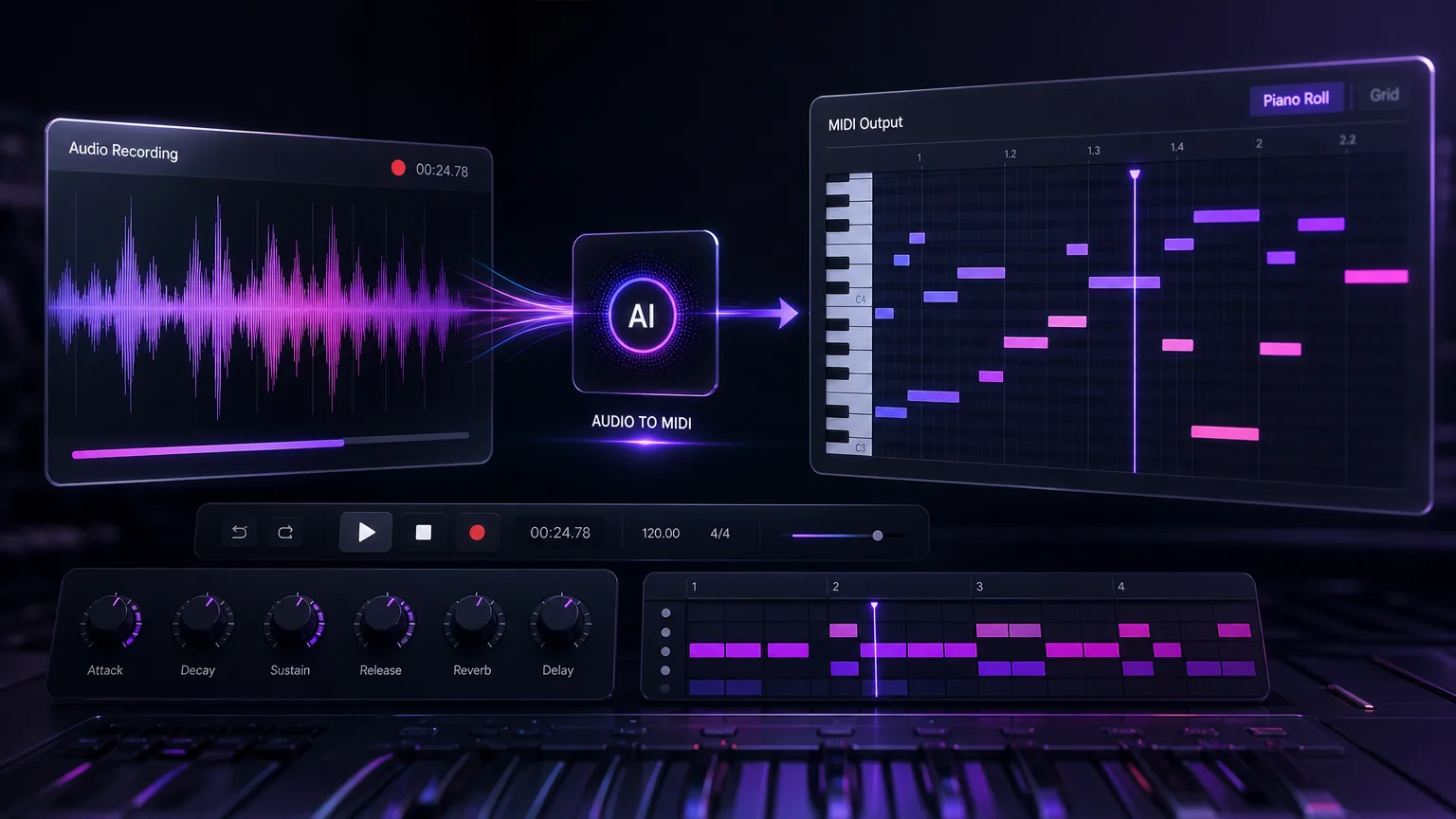
Audio-to-MIDI is useful when you want notes you can edit, not just audio you can play. It helps capture melodies, correct timing, and rebuild ideas inside a DAW.
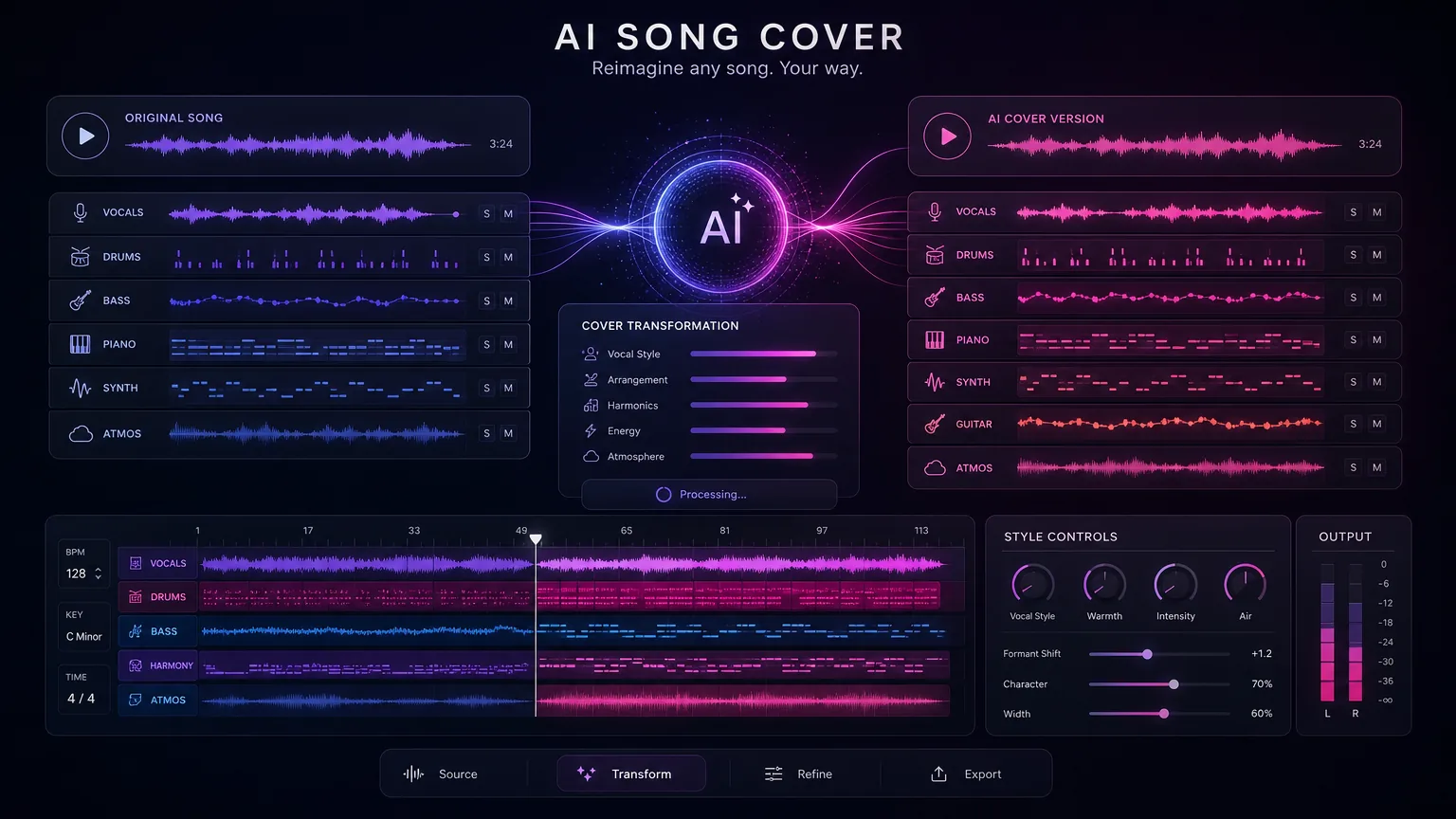
AI covers can be useful for demos, parody, localization, and creative experiments, but they need careful voice and rights decisions. This guide keeps the workflow practical and safer.
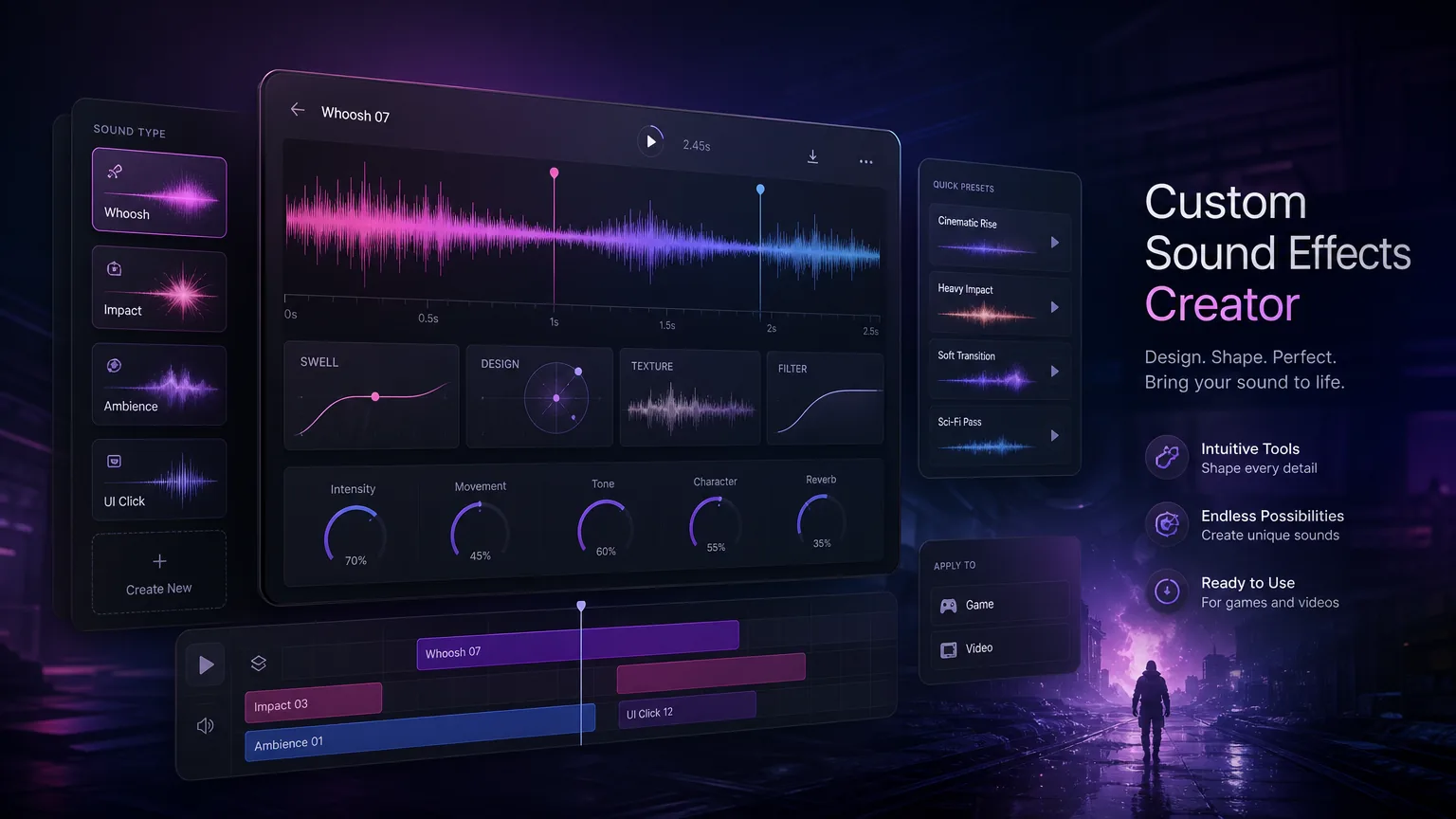
Custom SFX prompts work best when they describe the object, action, space, timing, and mix role. This guide gives a repeatable format for video editors, game developers, and podcasters.
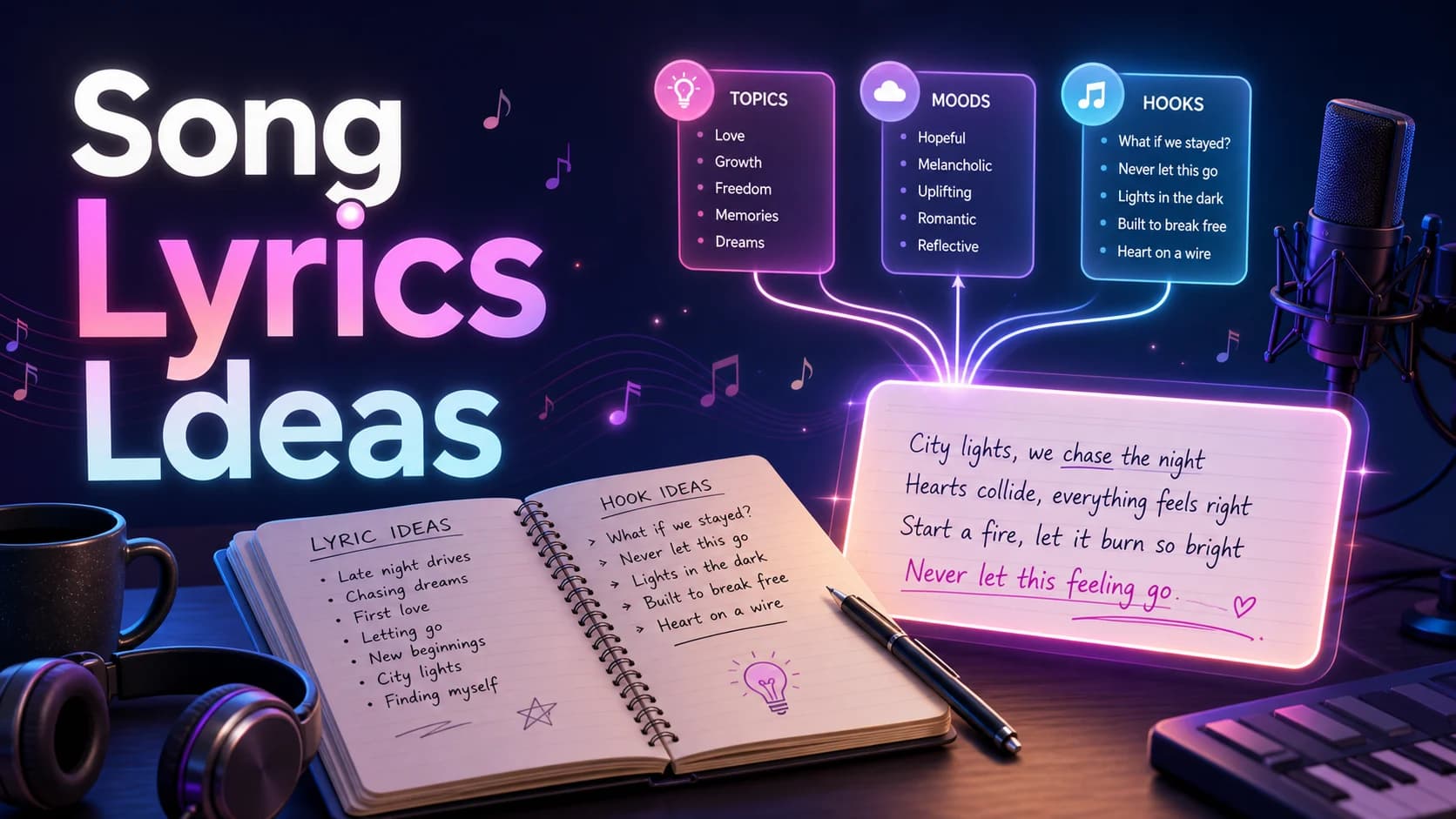
Strong lyrics usually begin with a specific situation, not a blank page. This guide shows how to turn moods, memories, objects, and hook phrases into lyric ideas that are easier to refine with AI.
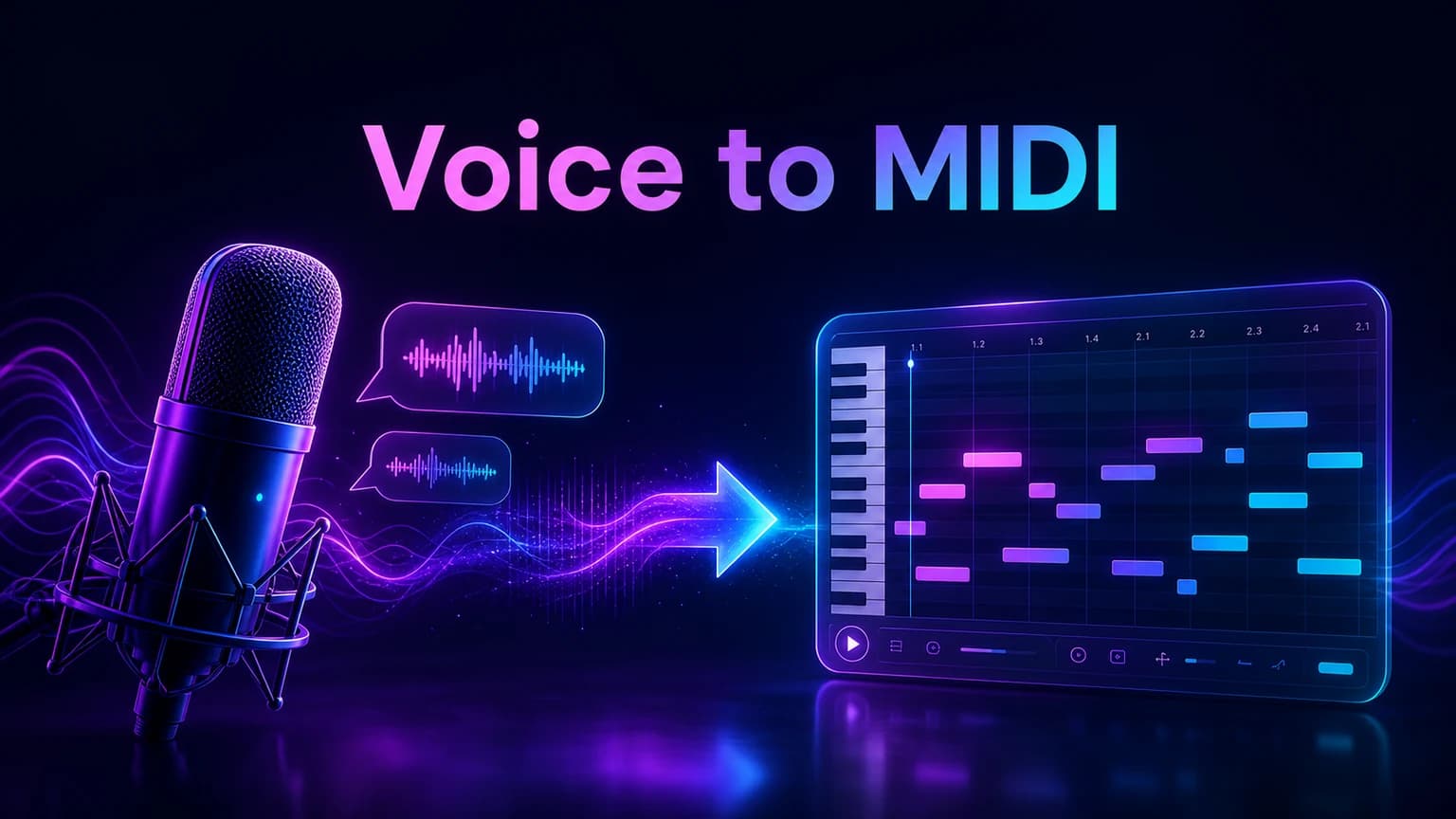
Voice to MIDI works best when you treat the recording as a clean melody sketch, not a finished performance. This guide shows how to prepare singing or humming, convert it into editable notes, and use the result inside a DAW or AI music workflow.
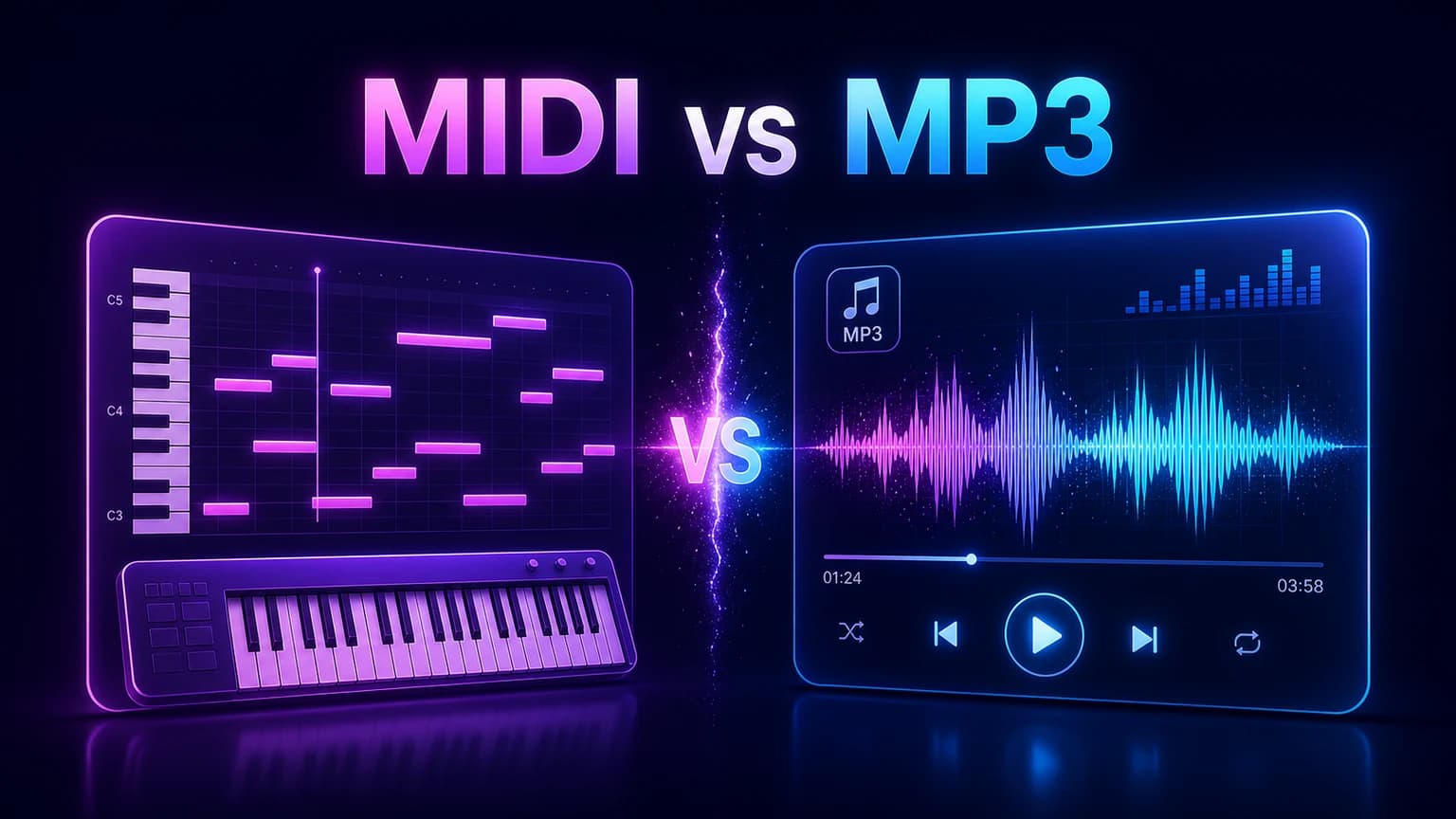
MIDI and MP3 solve different music problems. MIDI is for editable notes and production control, while MP3 is for listening, sharing, and publishing finished audio. Knowing the difference helps you choose the right AI music workflow.
AI duet songs need more planning than single-vocal tracks. Define who sings each section, how the voices answer each other, where harmonies enter, and what emotional shift the duet should create.
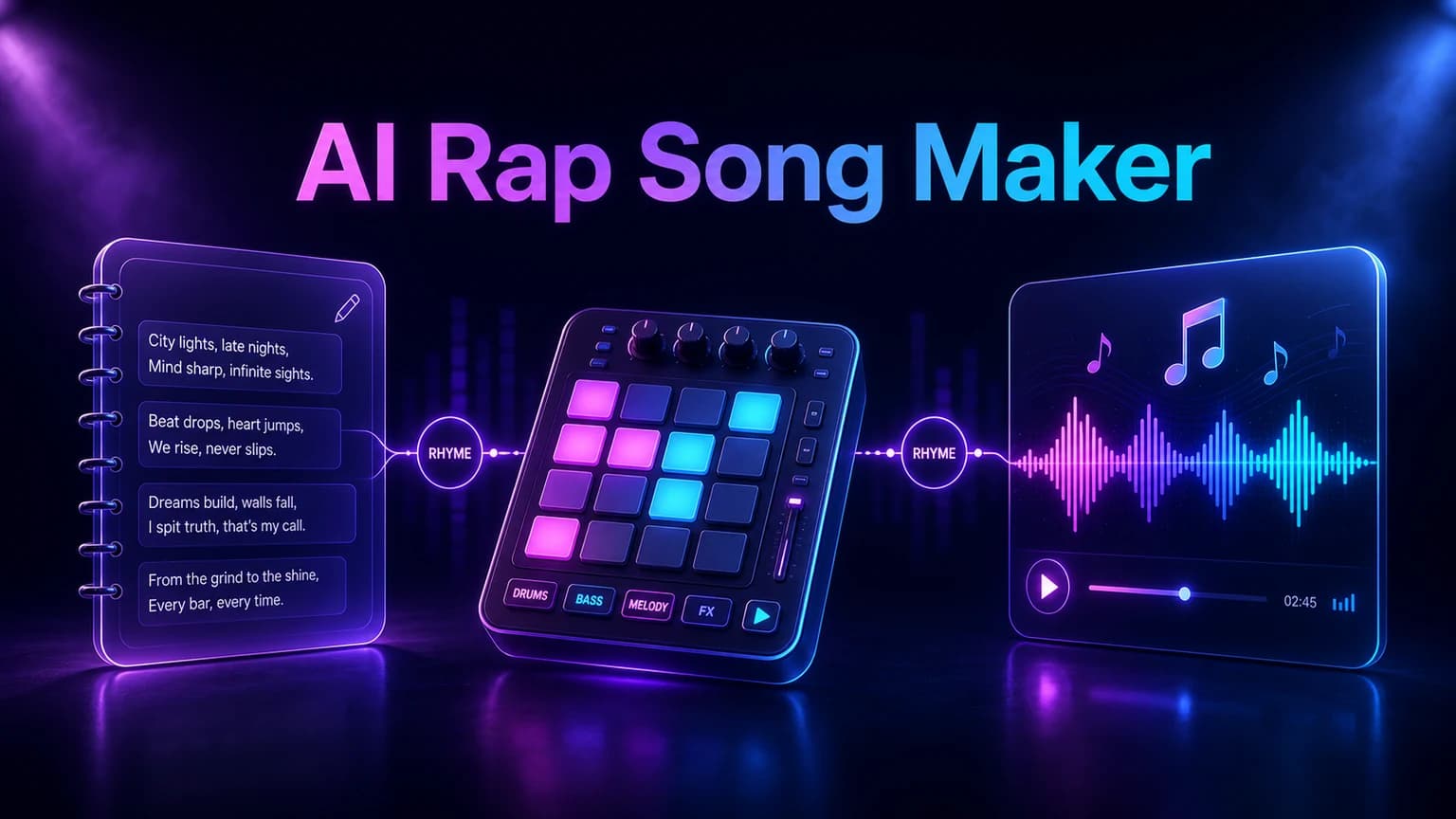
AI rap works better when the prompt controls topic, hook, flow, rhyme density, beat style, and vocal energy. This guide keeps the workflow original and avoids risky artist imitation.
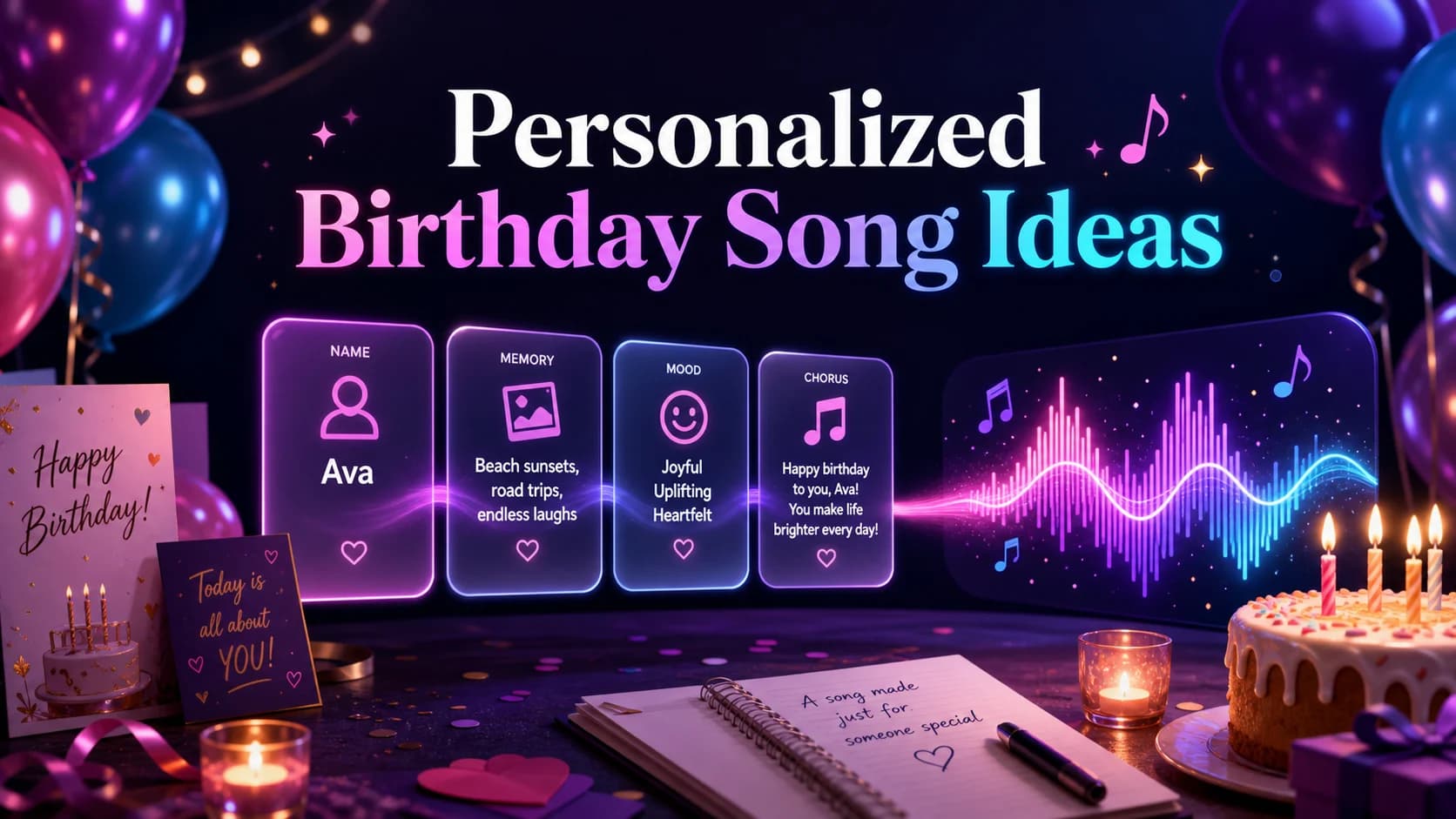
A personalized birthday song works best when it sounds like it could only be for one person. Use names, relationships, memories, humor, and a simple chorus before generating the track.
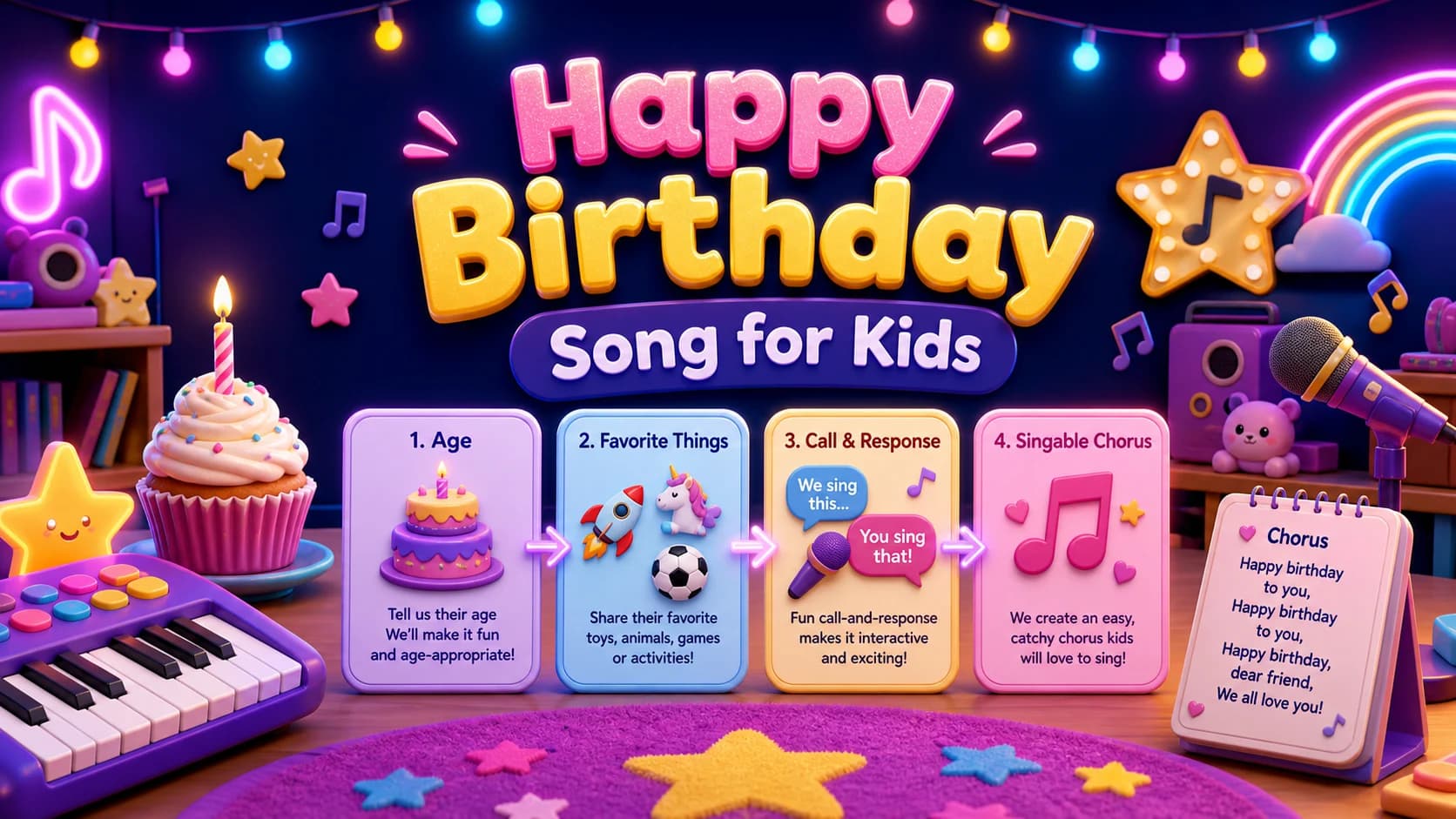
Kids birthday songs need short lines, clear repetition, playful details, and a chorus that adults and children can sing together. This guide turns age, favorite things, and party energy into a safer prompt.
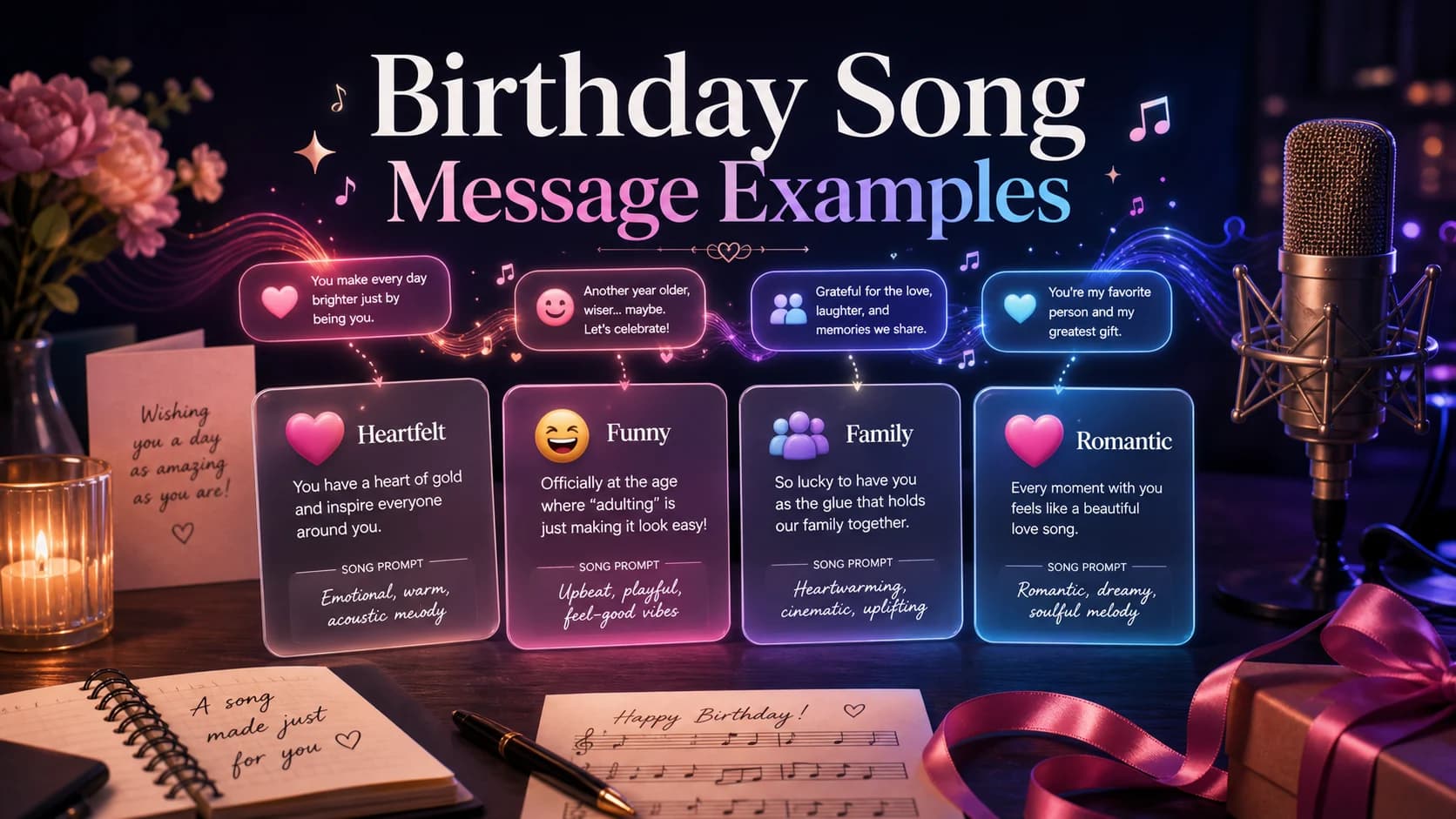
The message you write before generating a birthday song controls the tone of the final track. Use these examples to turn wishes, jokes, memories, and gratitude into clear song prompts.
Royalty-free AI music is useful when creators need original tracks for videos, podcasts, ads, games, and brand content without hiring a composer for every draft. This guide shows how to brief, generate, review, and organize tracks so the music is usable in real production workflows.
Copyright-free AI music is strongest when it is created from an original brief, reviewed in context, and stored with simple records. This guide explains how to generate tracks with Make A Song AI while keeping your inputs, prompts, and final use clean.
YouTube music needs to support editing, pacing, voiceover, and monetization. This guide shows how to create AI songs for intros, background beds, Shorts, tutorials, ads, and channel identity without fighting the timeline.
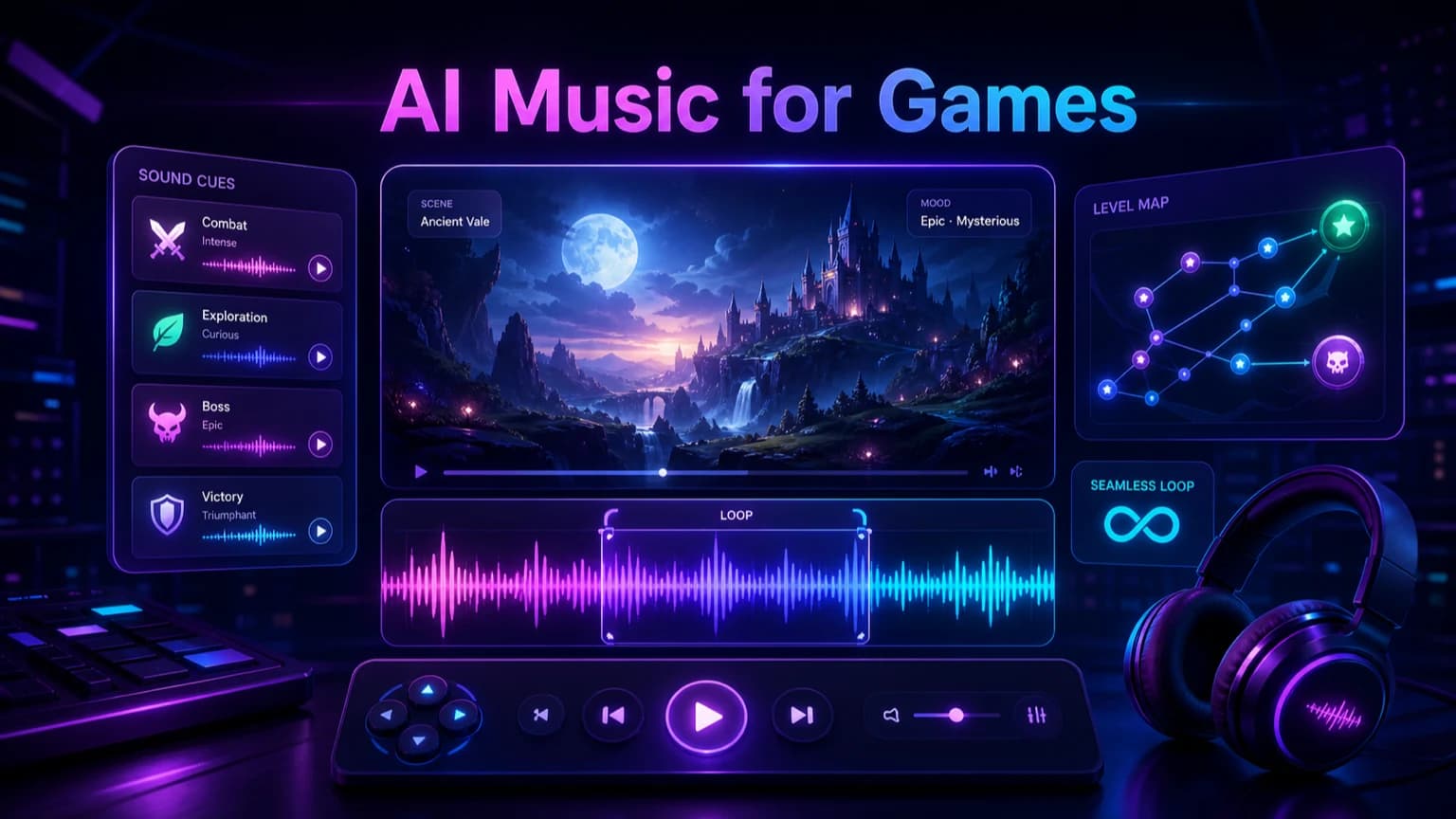
Game music needs loops, transitions, emotional states, and clear implementation notes. This guide shows how to prompt AI music for menu screens, exploration, combat, victory, ambient scenes, and prototypes without losing control of the player experience.
Podcast music should make a show feel recognizable without covering the host. This guide shows how to create intros, beds, transitions, sponsor cues, trailers, and recurring segment music that stays short, clear, and edit-friendly.
Intro music has one job: make the first seconds feel intentional. This guide shows how to prompt short openers for YouTube channels, podcasts, streams, demos, launches, and social videos without creating music that is too long or distracting.
Background music for video should support pacing, emotion, and voice clarity. This guide shows how to prompt AI music beds for tutorials, product demos, vlogs, ads, Shorts, explainers, and brand videos without overpowering the edit.
A jingle is not just a short song. It is a repeatable brand hook that helps people remember a product, show, offer, or campaign. This guide shows how to plan AI jingles for ads, podcasts, launches, creator channels, and social videos.

AI now touches almost every stage of music creation, from lyric drafts to full demos and stem separation. The biggest change is not that machines replace taste, but that ideas become cheap to try, so direction, editing, and originality decide what is worth releasing.
There is no single best AI music generator for everyone. The right tool is the one that passes your own tests: the genre you need, vocals you would publish, control over lyrics, clear rights, honest pricing, and the editing tools you will actually use after generation.
A good AI lyrics platform does more than rhyme. It follows song structure, keeps lines singable, lets you rewrite single sections, avoids copying existing songs, and ideally lets you hear the lyrics as a song so you can judge them by sound, not only on the page.
Use the blog to decide the song direction, then jump into the matching tool for lyrics, vocals, stems, video, or sound effects.
Make the track
Generate AI music from prompts, lyrics, styles, moods, and vocal directions. Create complete songs with melody, arrangement, cover art, and shareable results.
Make the track
Use the lyrics to song generator to turn finished lyrics into AI music with vocals, melody, rhythm, style, and arrangement around your words.
Make the track
Use the text to song generator to turn ideas, stories, messages, scenes, and prompts into AI songs with lyrics, vocals, melody, and arrangement.
Make the track
Write song lyrics free with daily credits. Turn topics, moods, genres, and song structures into editable verses, choruses, and hooks you can revise or turn into music.
Make the track
Remove vocals from songs online with AI. Upload MP3, WAV, FLAC, AAC, or OGG files and create vocal and instrumental stems for karaoke, covers, and remix ideas.
Make the track
Record or upload a 5–60 second hum, voice note, or melody, then add lyrics and style direction to create an arranged AI song with vocals.