Tell the story
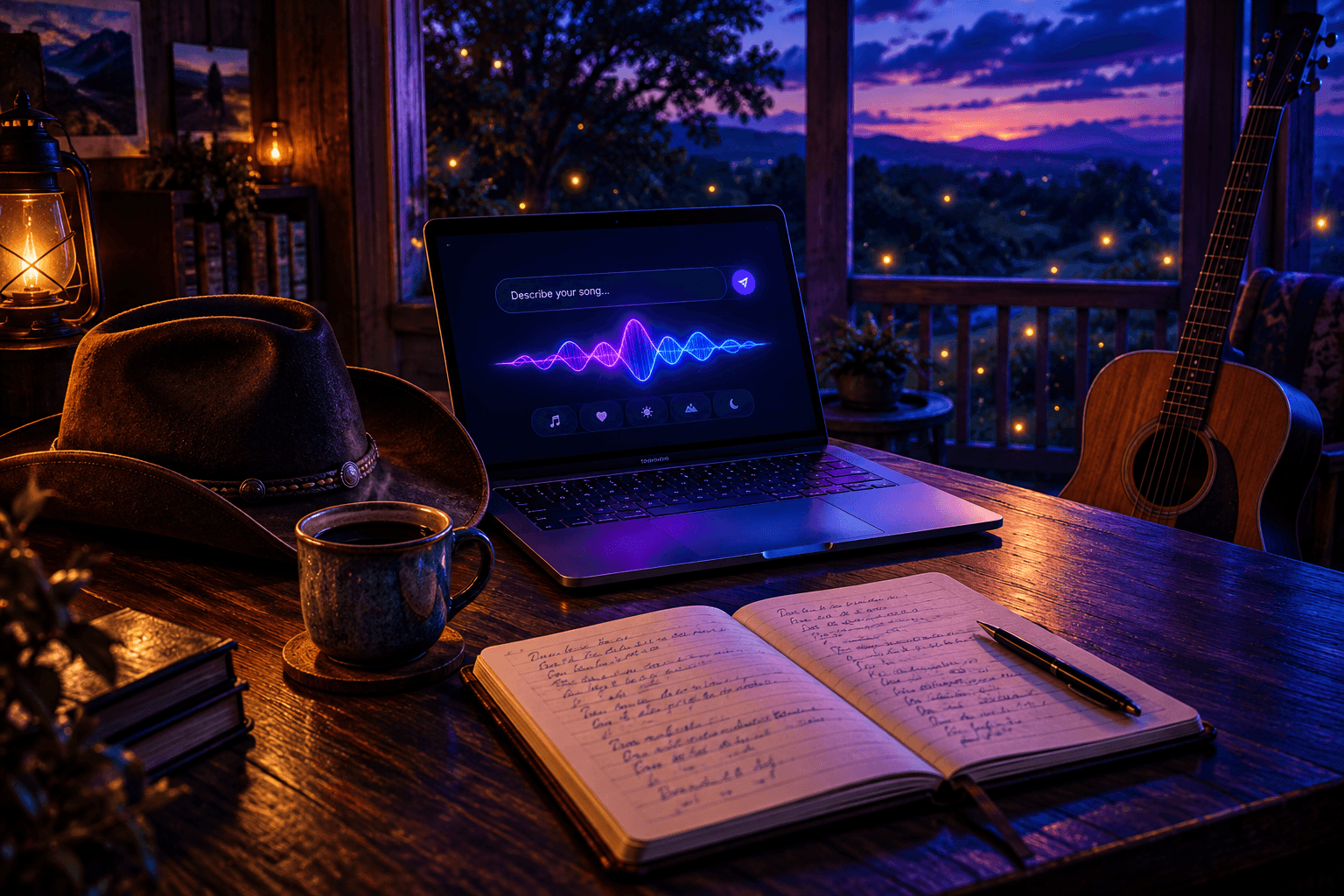
Write who the song is about, where it happens, and the one moment it should capture. Add names, places, and small objects you want in the lyrics.
Describe a back road, a hometown, a first dance, or a heartbreak, and turn it into an original country song with vocals. Start from a researched country preset, then shape the subgenre, mood, voice, and tempo.
Create now
Keep the preset or rewrite it with your own names, places, and memories. Specific details such as a county road, a porch light, or a truck radio make country lyrics feel real.
Your plan supports songs up to 1 min
Actual duration can vary with lyrics, structure, and model.
Lyrics, titles, and styles must not contain names of famous people or inappropriate words. Lyrics cost 1 credit; V2.0 costs 3, V2.5 Pro costs 6, and V3 costs 12 credits.
Prompt ideas
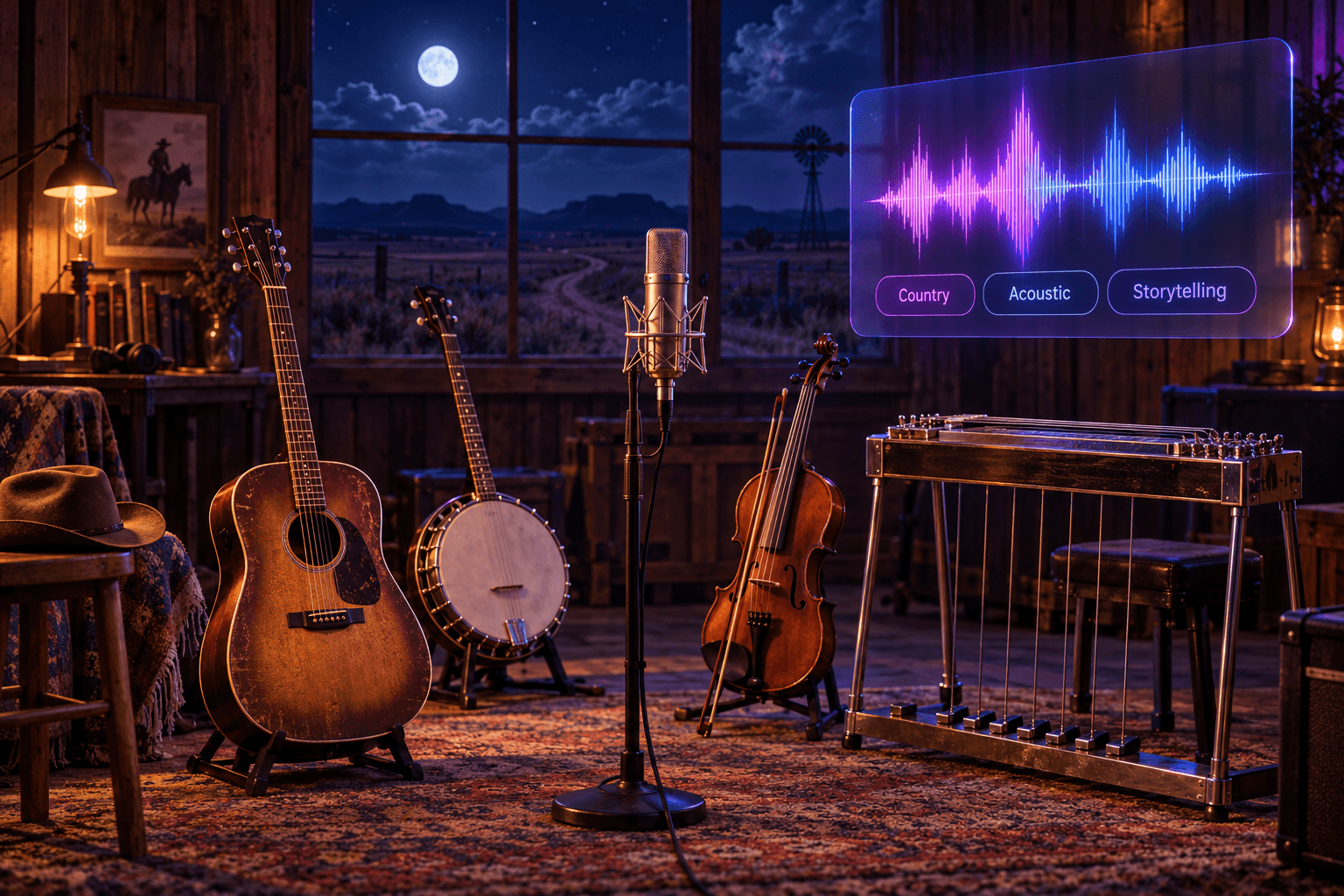
Strong country prompts name one precise moment, the subgenre, the signature instruments, the vocal delivery, and the rhythm feel instead of only asking for "a country song".
How it works
Start with the story, pick the country sound, then refine the hook until the title lands inside the first minute.
Write who the song is about, where it happens, and the one moment it should capture. Add names, places, and small objects you want in the lyrics.
Choose a subgenre such as modern country, honky-tonk, bluegrass, or Americana, then set the mood, vocal style, and a rhythm such as two-step, shuffle, or waltz.
Listen for the chorus and title line. If it drifts toward pop or rock, ask for clean twangy guitar, pedal steel, fiddle, and a storytelling vocal, then generate again.

Use cases
Country music carries nostalgia, family, love, and a sense of place, which makes it a natural fit for personal songs and story-driven content.
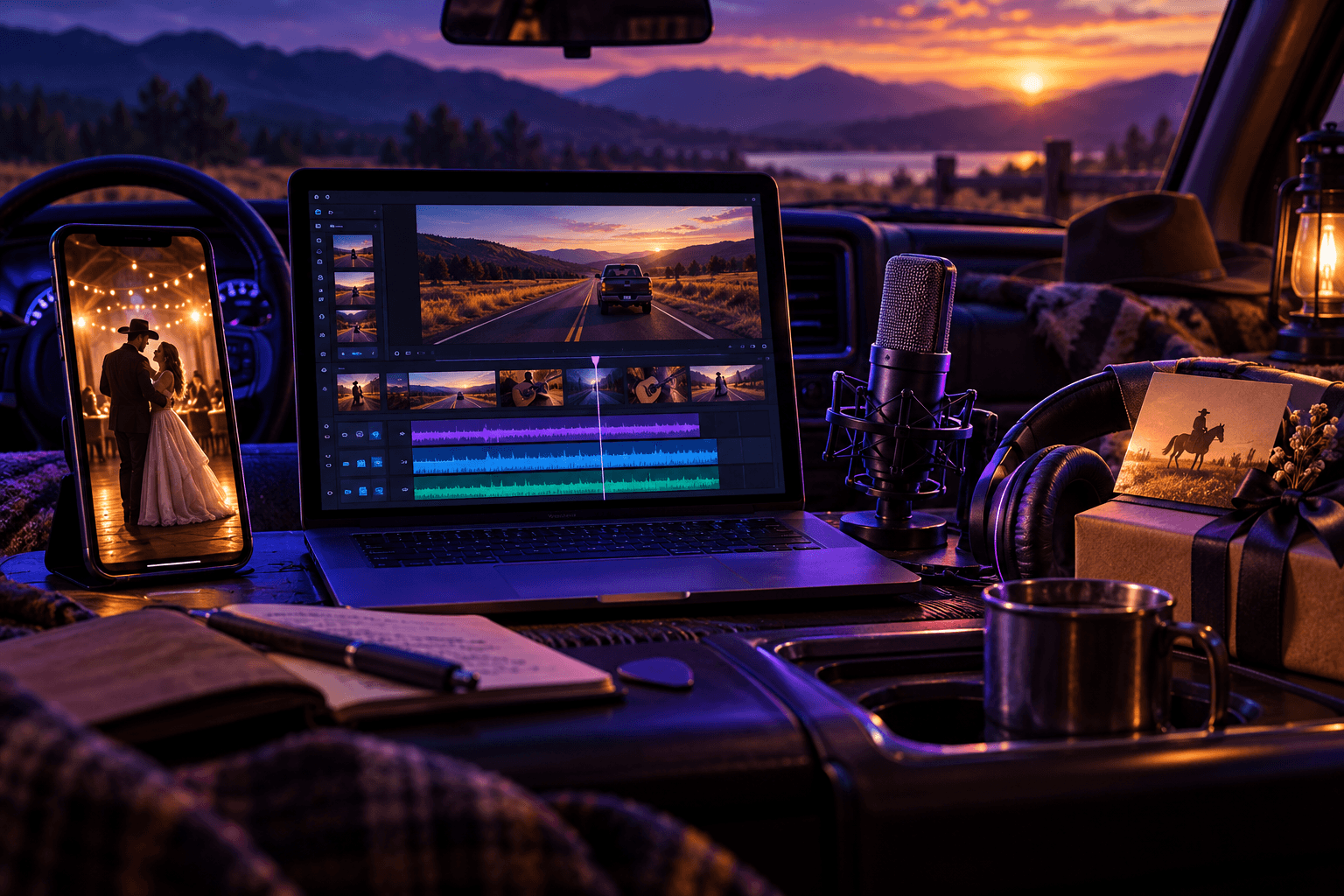
Write a birthday, anniversary, or thank-you song that names the people, places, and inside jokes that matter.
Create a first-dance waltz, an entrance song, or a toast tribute built around how the couple met.
Score road trips, ranch life, outdoor adventures, and hometown stories with warm acoustic tracks.
Make a short country intro, outro, or theme that fits rural, sports, family, or storytelling shows.
Country subgenres
Country covers decades of different sounds. Naming the subgenre and its signature instruments keeps the AI from defaulting to generic pop-country.
Polished drums, acoustic and electric guitars, pedal steel, and a big chorus built for radio-style hooks.
Shuffle rhythm, barroom piano, twangy guitar, and fiddle for dance-hall and Friday-night songs.
Fast banjo rolls, mandolin, fiddle, upright bass, and close high harmonies with no drums.
Rootsy folk-country with fingerpicked guitar, harmonica, and a reflective, honest vocal.
Raw guitars, a gritty half-spoken vocal, and a stripped-back band with a rebellious edge.
Slow tempo, acoustic guitar, piano, and pedal steel that leave room for an emotional lyric.

Finish the song
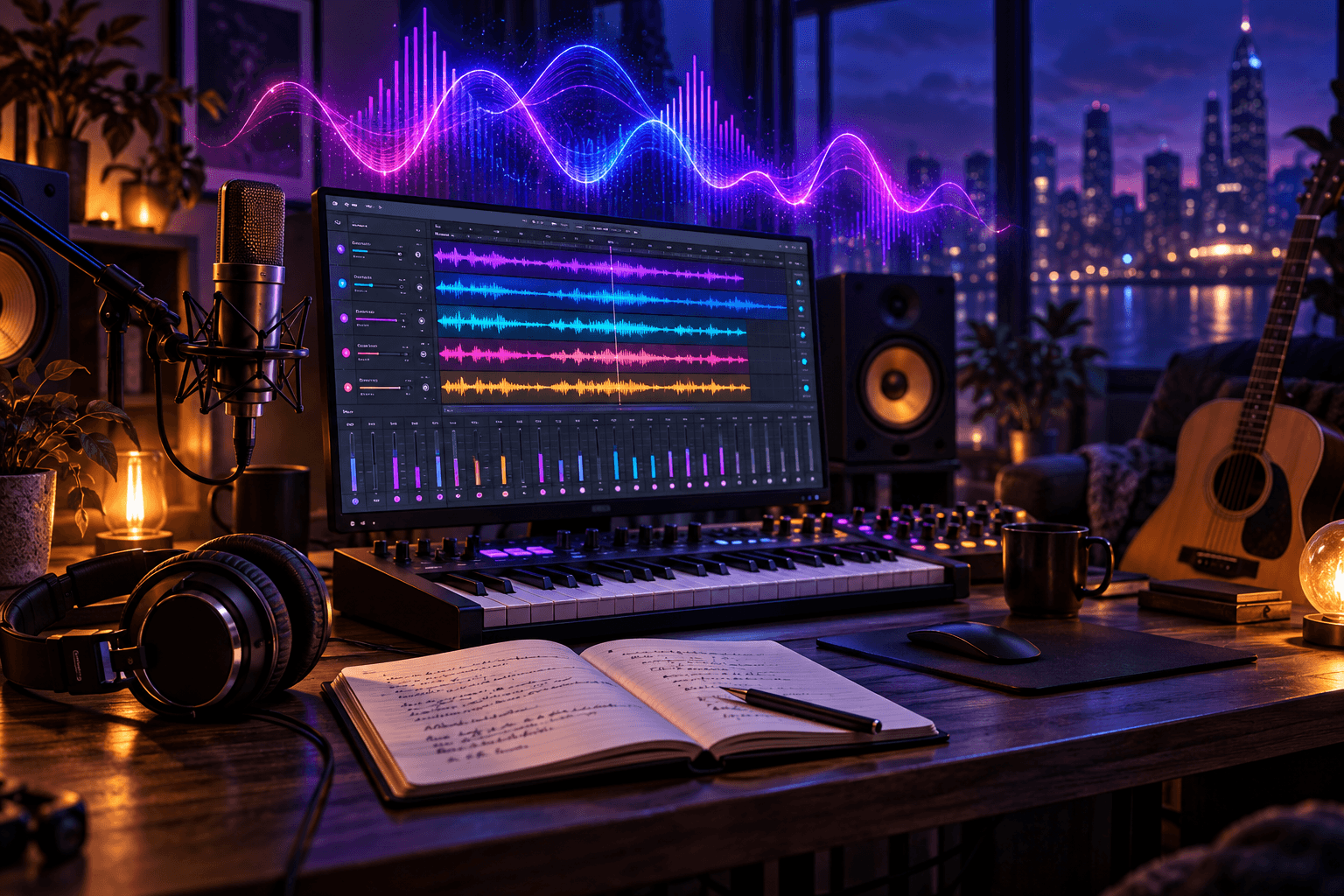
Draft the story first, set your own lyrics to music, or split a finished track into stems for editing and practice.
Draft verses, a chorus, and a bridge around your country story before generating the music.
Already wrote the lyrics? Set your own words to a country arrangement with vocals.
Explore other genres or create instrumental country beds for videos and podcasts.
Separate vocals, drums, bass, and instruments from a finished track for remixing or practice.
AI country song FAQ
Plan the story, sound, rights, and refinements before you generate your final country track.
Describe your story and choose country styles, moods, vocals, and tempo tags. The page sends that brief through the same music task, credit, progress, storage, and failure-refund flow used by the main song generator.
Yes. Paste your lyrics into the prompt or use Lyrics to Song so the generator keeps your words. If you only have an idea, draft verses and a chorus first with the AI Lyrics Generator.
Name the subgenre and the signature instruments, for example pedal steel, fiddle, banjo, or barroom piano, ask for a clean twangy guitar rather than distortion, and choose a rhythm such as two-step, shuffle, train beat, or waltz.
Yes. Select Instrumental Only or ask for a lyric-free arrangement, then describe the lead instruments, length, and ending you need for a video, podcast, or background track.
No. Describe musical traits such as a warm baritone, a southern drawl, close harmonies, or a 1970s outlaw feel instead of naming a real artist, song, or band. Keep lyrics and melodies original.
Use the rights included with your plan and review any lyrics or reference material you add before publishing. Personal gifts, social posts, and creator content work best when the lyrics are your own.