AI Lyrics Generator Guide: Fix Writer’s Block Without Losing Your Voice
Use AI lyrics generators for hooks, verses, rhyme options, and rewrites while keeping your own point of view and song identity.
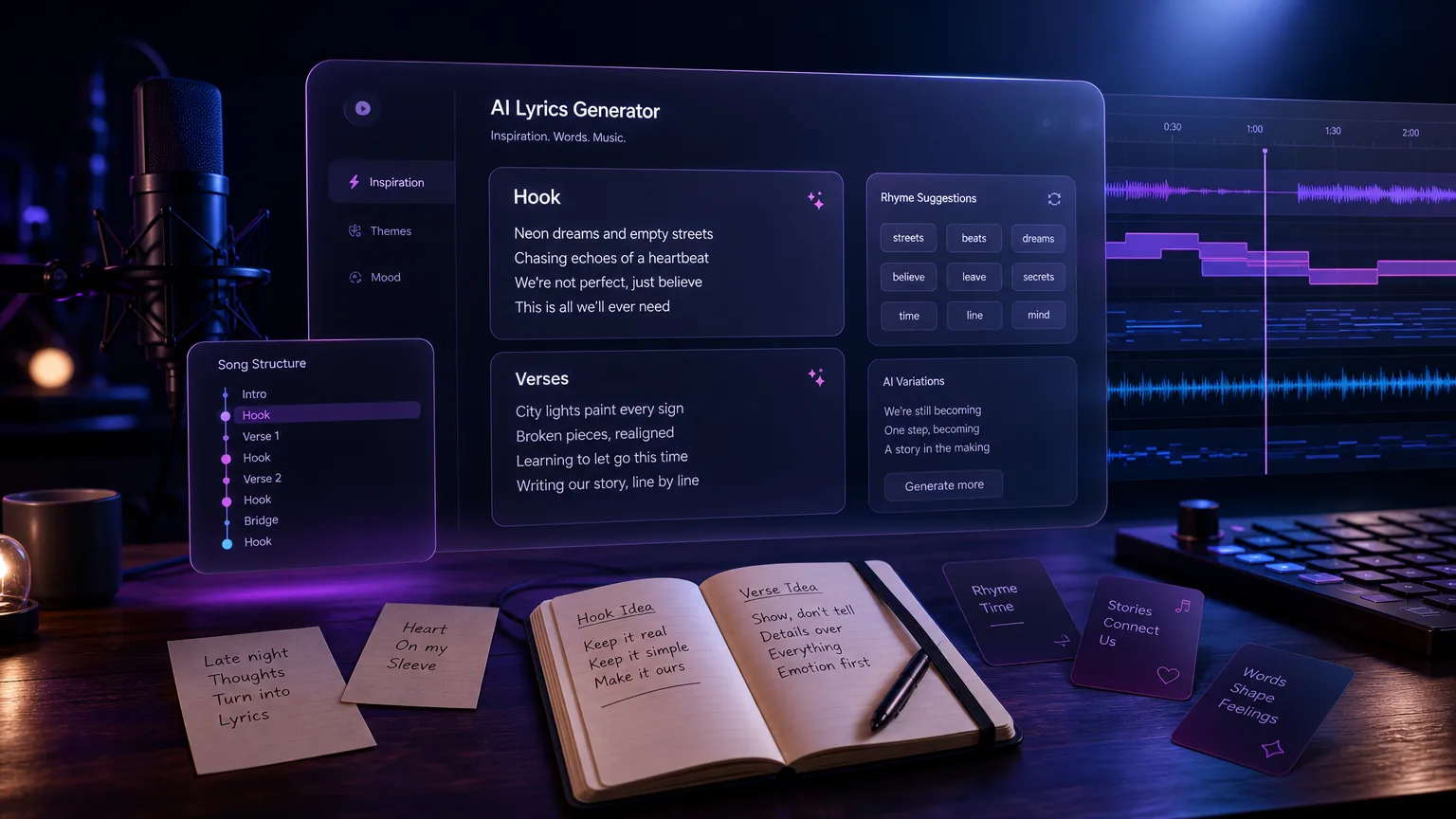
AI can break writer’s block, but the best lyrics still need a human point of view. This article shows how to use AI for options, not autopilot.
Before you start
Give the generator a real situation, not just a topic.
Ask for multiple hook angles before choosing one.
Edit for voice, specificity, and singable rhythm.
Move strong lyrics into the lyrics-to-song workflow.
Practical workflow
Use the guide as a repeatable production pass
This guide is organized around the same steps a creator needs before opening the matching tool: define the input, control the model, review the result, then change one variable at a time.
Use AI to create options, not final identity
Prompt with situation and stakes
Edit for singability
Create a hook bank before writing verses
Field-tested prompt patterns
Hook repair
Chorus feels generic
Rewrite only the chorus for a [genre] song about [theme]. Keep it under four lines, make the first line emotionally specific, repeat [key phrase], and avoid abstract filler words.
Verse expansion
Story needs detail
Write verse two from the perspective of [speaker]. Use concrete images from [place or memory], keep line lengths singable, and lead naturally into this chorus: [chorus].
Tone alignment
Lyrics do not match vocal mood
Revise these lyrics for a [vocal tone] performance. Keep the meaning, reduce awkward syllables, add stronger vowel endings, and preserve the hook phrase.
Quality bar
Do not approve the draft until it passes these checks
Singable length
Lines can be sung without rushing or dropping important words.
Specific imagery
At least one verse includes concrete nouns, places, actions, or sensory detail.
Hook memory
The chorus repeats a phrase listeners can remember after one pass.
Point of view
The lyric does not switch speaker or tense without a reason.
Vocal fit
The lyric leaves space for breath, emphasis, and melodic lift.
Use AI to create options, not final identity
Writer’s block often happens because you are trying to solve theme, rhyme, rhythm, and melody at the same time. An AI lyrics generator can separate those jobs. Ask for hook options, rhyme banks, verse angles, or bridge ideas before committing to a final lyric.
The goal is not to accept the first output. The goal is to produce raw material that helps you see the song from more angles.
Next step: AI lyrics generator — Draft or repair lyric sections before arranging the full song.
Prompt with situation and stakes
A topic like love is too broad. A better prompt explains the scene and stakes: someone finds an old voicemail before moving out, or a creator is chasing a deadline at 2 a.m. Specific scenes give lyrics sensory detail and emotional direction.
Add point of view as well. First person feels intimate, second person feels direct, and third person can make the song more cinematic.
Next step: lyrics to song arrangement — Move from polished lyric to production notes and vocal direction.
Edit for singability
Good lyrics on the page can still be hard to sing. Read each line aloud. Shorten crowded phrases, replace awkward consonants, and put emotional words near the end of lines where they can carry melody.
When you move the lyric into a generator, section labels and balanced line lengths will make the arrangement easier to shape.
Next step: lyrics to song tool — Convert the finished lyric into an audible arrangement.
Create a hook bank before writing verses
The hook carries most of the listener memory of a song. Before writing full verses, ask the AI lyrics generator for ten hook angles with different emotional promises: regret, confidence, celebration, nostalgia, humor, or tension. Pick the strongest angle and build the rest of the lyric around it.
This prevents a common mistake where verses contain interesting lines but the chorus has no memorable phrase. A hook bank gives you language that can repeat naturally in titles, captions, and metadata later.
Ask for hooks in the same point of view as the song.
Prefer phrases that are easy to sing aloud.
Save rejected hooks as future song seeds.
Next step: AI song prompt guide — Add genre, mood, and mix constraints after the words are ready.
Rewrite with constraints instead of replacing everything
When a lyric feels generic, do not regenerate the entire song immediately. Ask for one targeted rewrite: make verse two more specific, add sensory details, reduce cliches, simplify the chorus, or make the bridge more hopeful. Focused constraints preserve the useful parts of the draft.
This approach gives you a writing system, not just a blank text box. Each rewrite has a purpose, so the lyric keeps its identity while becoming easier to sing.
Move from lyrics to production
After the lyric passes a read-aloud test, place it into a lyrics-to-song workflow with section labels and arrangement notes. The same words can become pop, folk, rap, or cinematic ballad depending on vocal delivery and instrumentation.
A strong writing process should show that path clearly: generate ideas, revise lyrics, turn lyrics into music, and then check rights before publishing. The sequence keeps creative decisions in order.
Frequently asked questions
Can AI write a complete song lyric?
Yes, but the strongest results usually come from human editing after AI creates options and structure.
How do I avoid generic AI lyrics?
Use specific scenes, unusual details, clear point of view, and revision passes that replace vague lines with concrete images.
Should I generate lyrics before music?
If the words matter most, start with lyrics. If vibe matters most, start with a text-to-song brief and refine the lyric after hearing melody.