AI Song Cover Guide: Voice Style, Licensing, and Safe Creative Use
Plan AI song covers with safer voice direction, upload choices, rights checks, arrangement changes, and publishing workflows.
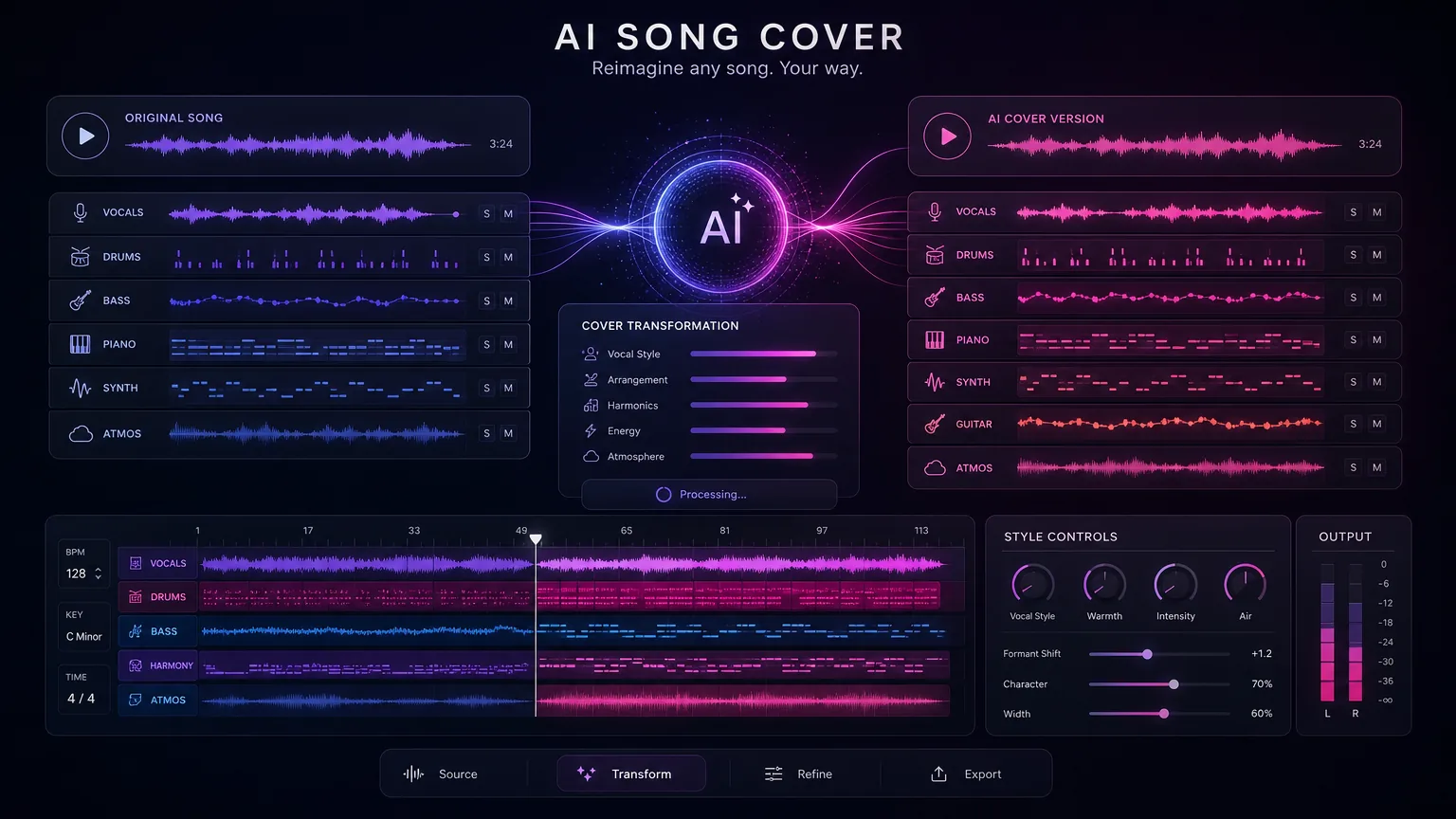
AI covers can be useful for demos, parody, localization, and creative experiments, but they need careful voice and rights decisions. This guide keeps the workflow practical and safer.
Before you start
Use voice qualities instead of celebrity cloning.
Confirm rights for the composition and recording.
Change arrangement enough to make the cover creative.
Keep demo, private, and commercial workflows separate.
Practical workflow
Use the guide as a repeatable production pass
This guide is organized around the same steps a creator needs before opening the matching tool: define the input, control the model, review the result, then change one variable at a time.
Decide what kind of cover you are making
Guide voice style without impersonation
Make the arrangement your own
Separate demo, private, and public cover workflows
Field-tested prompt patterns
Original-style cover
Safe creative reinterpretation
Create a new version of [song idea or public-domain source] in a [genre] arrangement. Use a distinct vocal tone, original instrumentation, and avoid imitating any specific living singer.
Voice style boundary
Avoiding unsafe imitation
Use a warm, expressive [range] vocal with [texture] and [energy]. Do not clone, name, or imitate a real performer. Keep the melody and arrangement original.
Cover release checklist
Before publishing
List the source song, ownership status, license needs, vocal permissions, platform rules, and whether the generated version uses any uploaded copyrighted material.
Quality bar
Do not approve the draft until it passes these checks
Source status
Know whether the source is original, licensed, public domain, or copyrighted.
Voice consent
Do not imitate a real voice without clear permission.
Arrangement distance
A safer version changes instrumentation, vocal style, and production identity.
Platform rules
Check whether the destination allows AI covers or synthetic vocals.
Documentation
Keep license notes, prompt records, and source details with the export.
Decide what kind of cover you are making
A private demo, a parody, a translation, and a commercial release all carry different expectations. Before generating, decide whether the cover is for learning, social content, client work, or public distribution.
The more public and commercial the use, the more important rights checks become.
Next step: AI song cover — Create a cover-style draft after rights and voice boundaries are clear.
Guide voice style without impersonation
Avoid instructions that clone a real celebrity or imply official affiliation. Use descriptors such as warm baritone, bright pop vocal, soft indie tone, theatrical harmony, or gritty rock lead.
This gives creative direction while reducing confusion with real performers.
Next step: commercial rights for AI music — Review broader commercial use and source tracking concerns.
Make the arrangement your own
A safe and interesting cover often changes tempo, instrumentation, mood, or structure. A stripped acoustic version, synthwave reinterpretation, or cinematic trailer arrangement can stand apart from the source while still honoring the song idea.
Next step: AI vocal remover vs stem splitter — Understand what extracted stems can and cannot solve legally.
Separate demo, private, and public cover workflows
A private learning demo can be fast and experimental. A public upload needs more care around rights, voice identity, artwork, title formatting, and platform rules. A client or commercial cover needs the strictest record keeping and approval path.
Label the workflow before generating. That single decision changes how much you should transform the arrangement, what source audio you can upload, and whether the result should ever leave a private folder.
Private demos can focus on learning and arrangement tests.
Public uploads need rights checks and clear attribution rules.
Commercial covers require documented permissions and platform compliance.
Next step: AI song prompt guide — Describe musical traits without asking for artist imitation.
Use cover content to answer rights and creative intent
AI song cover projects usually have two questions at once: how to make the cover and whether it can be published. Answer both before moving into vocal removal, lyric preparation, or commercial rights review.
That structure makes the workflow safer than a shallow feature demo. It covers creative direction, source preparation, rights review, and final release decisions in one place.
Prepare source files before generating the cover
Good preparation reduces messy output. Use a clean instrumental, a clear lyric reference, and arrangement notes that explain what should change. If the workflow starts from separated stems, check the vocal and instrumental files for artifacts before using them as source material.
For public projects, keep the original source, license notes, prompt, generated draft, and final export in one folder. This protects the creative process and makes revision easier if a distributor asks for details.
Compare the cover against the creative brief
A cover should be evaluated against the brief, not only against the original song. Ask whether the new arrangement has a clear reason to exist, whether the voice direction avoids impersonation, and whether the listener can understand what changed.
That evaluation step turns the article into a complete guide: plan the cover, generate safely, check rights, revise the output, and decide whether it is private or publishable.
Frequently asked questions
Can I publish AI covers commercially?
Only when you have the necessary rights and the platform terms allow your use. Composition and recording rights may both matter.
Can I clone a famous singer?
Do not request official or celebrity voice cloning. Use broad vocal qualities instead.
What makes an AI cover more original?
Change arrangement, tempo, instrumentation, vocal direction, or language instead of copying the source performance.